
Ngorongoro Conservation Area

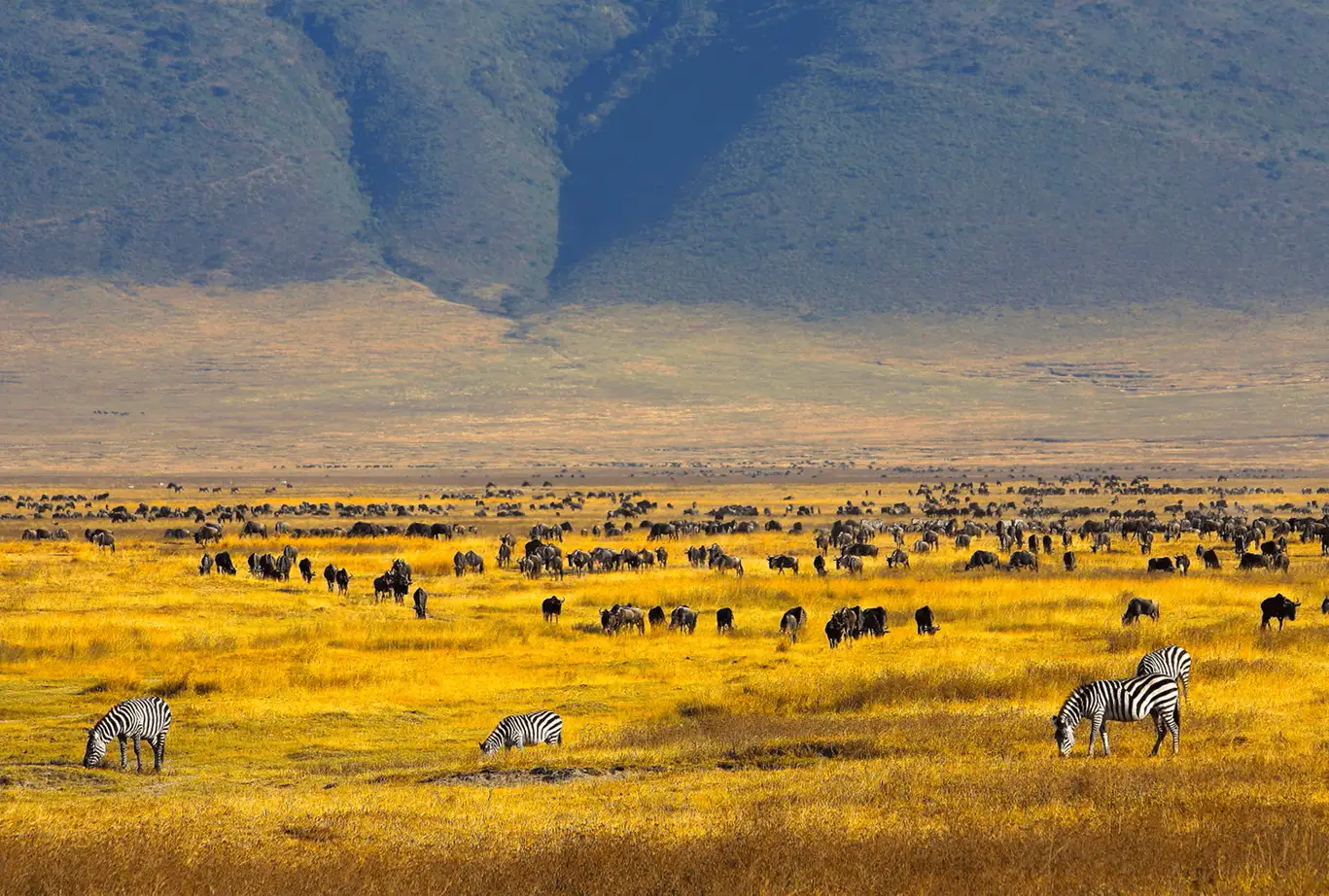
Discover Ngorongoro Conservation Area With Martial Eagle Adventures

Few places in Africa combine wildlife, ancient human history, dramatic geology and living culture as powerfully as the Ngorongoro Conservation Area. Located in northern Tanzania, this extraordinary protected landscape is one of the most important destinations on the country’s famous safari circuit and home to the legendary Ngorongoro Crater, one of the world’s largest intact volcanic calderas.
For travelers searching for an unforgettable Tanzania safari experience, the Ngorongoro Conservation Area offers far more than a single game drive. Its vast highlands, volcanic craters, open grasslands, archaeological sites, forests and seasonal wildlife corridors create a landscape of exceptional ecological and cultural importance. The area also supports pastoral communities who have lived alongside wildlife for generations, making Ngorongoro one of the most distinctive conservation landscapes in Africa.
The centerpiece is the Ngorongoro Crater, where a remarkable concentration of wildlife lives within a naturally enclosed volcanic basin. Visitors may encounter lions, elephants, buffaloes, zebras, wildebeest, hippos, hyenas, gazelles and the highly sought after black rhinoceros during a single safari day. Beyond the crater, the wider conservation area includes places such as Olduvai Gorge, Empakaai Crater, Olmoti Crater, the Ngorongoro Highlands and the plains stretching toward the Serengeti ecosystem.
At Martial Eagle Adventures, based in Arusha, Tanzania, we create expertly planned Ngorongoro safari experiences that combine wildlife viewing, breathtaking scenery, cultural discovery and professional local guiding. Whether you are planning a Ngorongoro Crater day trip, luxury Northern Circuit safari, family holiday, honeymoon safari or photographic journey through Tanzania, Ngorongoro is one of the destinations that should never be missed.
History of Ngorongoro Conservation Area
The history of Ngorongoro stretches far beyond modern tourism or conservation. This region is deeply connected to the geological evolution of East Africa, the movement of wildlife across the Serengeti ecosystem and some of the earliest chapters of human history.
Millions of years ago, intense volcanic activity shaped the highlands of northern Tanzania. The enormous volcano that once stood where Ngorongoro Crater is located eventually collapsed after a massive eruption, creating the vast caldera seen today. Over time, the crater floor developed into a fertile ecosystem of grasslands, swamps, forests and seasonal water sources capable of supporting large concentrations of wildlife.
The wider Ngorongoro landscape has also played a major role in understanding human evolution. Olduvai Gorge, located within the conservation area, became internationally famous for archaeological discoveries that contributed significantly to scientific knowledge about early human ancestors. Fossils, tools and other remains found within the gorge have helped researchers understand how ancient humans lived and evolved in East Africa.
Ngorongoro also has a long history of human settlement and pastoralism. Maasai communities have lived across the highlands and surrounding grasslands for generations, maintaining cultural traditions closely tied to cattle, seasonal grazing and the natural environment.
The conservation area was officially established in 1959, when Ngorongoro was separated from the neighboring Serengeti National Park. Unlike a conventional national park, the conservation area was designed around a multiple land use concept that allowed wildlife conservation, tourism and human habitation to exist within the same protected landscape.
Ngorongoro later gained global recognition because of its exceptional ecological, geological and cultural significance.
Important historical features include:
- Formation of Ngorongoro Crater through volcanic collapse millions of years ago
- Establishment of the Ngorongoro Conservation Area in 1959
- Long history of pastoral communities living within the landscape
- Major archaeological discoveries at Olduvai Gorge
- Recognition of Ngorongoro as one of Africa’s most important conservation landscapes
- Protection of wildlife corridors linked to the wider Serengeti ecosystem
- Continued importance for archaeology, anthropology, wildlife conservation and tourism
Today, Ngorongoro remains a place where natural history, wildlife and human heritage meet within one extraordinary landscape.
Geography Size and Ecology of Ngorongoro Conservation Area
The Ngorongoro Conservation Area covers approximately 8,292 square kilometers, making it far larger than the crater alone.
The landscape varies dramatically in altitude, vegetation and climate. It includes volcanic highlands, open plains, forests, crater lakes, freshwater springs, seasonal wetlands and grasslands.
The area forms part of the broader Serengeti ecosystem, one of the most important wildlife regions in the world.
Ngorongoro Crater
The most famous geographical feature is the Ngorongoro Crater.
The crater is approximately 19 kilometers across and its floor covers roughly 260 square kilometers. The walls rise hundreds of meters above the crater floor, creating a spectacular natural amphitheater.
The crater floor contains several habitats, including:
- Open grasslands
- Acacia woodland
- Swamps
- Seasonal streams
- Freshwater springs
- Lake environments
- Forest patches
These habitats support an exceptionally high density of wildlife.
Because the crater walls form a natural enclosure, many animals remain within the crater throughout the year, although some species move between the crater and surrounding highlands.
Lerai Forest
The Lerai Forest is one of the crater’s most important habitats.
This woodland is dominated by yellow fever acacia trees and provides shelter for elephants, baboons, bushbucks and various bird species.
Large bull elephants are often seen in and around the forest.
Lake Magadi
At the center of the crater lies Lake Magadi, a shallow alkaline lake that becomes particularly attractive to waterbirds.
Depending on water levels and seasonal conditions, flamingos may be seen feeding along the lake.
Other birds commonly observed include:
- Crowned cranes
- Herons
- Storks
- Pelicans
- Ducks
- Egyptian geese
Ngoitokitok Springs
Freshwater springs such as Ngoitokitok Springs provide important drinking water for wildlife.
The surrounding wetlands often attract hippos, waterbirds and grazing animals.
These areas can become excellent wildlife viewing locations during a Ngorongoro safari.
Empakaai Crater
The wider conservation area also contains the impressive Empakaai Crater.
This volcanic crater is less visited than Ngorongoro and contains a beautiful crater lake surrounded by steep forested walls.
Empakaai is especially appealing to travelers interested in hiking, scenery, birdwatching and quieter wilderness experiences.
Olmoti Crater
Olmoti Crater is another striking volcanic feature located in the Ngorongoro Highlands.
Visitors can enjoy guided walks through scenic landscapes, with opportunities to observe highland vegetation, pastoral landscapes and impressive views.
Wildlife of Ngorongoro Conservation Area
Ngorongoro is famous for its exceptional concentration of wildlife.
Animals commonly seen inside the crater include:
- African lions
- African elephants
- Cape buffaloes
- Wildebeest
- Zebras
- Thomson’s gazelles
- Grant’s gazelles
- Spotted hyenas
- Warthogs
- Hippos
- Jackals
- Elands
- Black rhinoceroses
One of the greatest wildlife attractions is the possibility of seeing the critically important black rhinoceros, although sightings are never guaranteed.
Leopards occur in the wider conservation area but are less commonly seen on the open crater floor.
Giraffes are generally associated with the highlands and surrounding plains rather than the crater floor itself because the steep crater walls make access difficult for them.
The wider conservation area also supports:
- Cheetahs
- Leopards
- Servals
- Bat eared foxes
- Ostriches
- Numerous antelope species
- Hundreds of bird species
The plains west of Ngorongoro also form part of the seasonal movements associated with the Great Wildebeest Migration, particularly around the Ndutu and southern Serengeti ecosystem.
Accessibility to Ngorongoro Conservation Area
Ngorongoro Conservation Area is one of the most accessible major safari destinations in northern Tanzania.
Most safaris begin in Arusha, the main tourism hub for the Northern Circuit.
The journey from Arusha to the Ngorongoro area is approximately 180 kilometers, depending on the final destination, and commonly takes around three to four hours by road.
The route usually passes through:
- Meserani
- Makuyuni
- Mto wa Mbu
- Karatu
The road journey itself offers beautiful views of rural Tanzania, the Great Rift Valley and the highlands approaching Ngorongoro.
Traveling From Arusha
Most travelers visit Ngorongoro in a private 4×4 safari vehicle with a professional driver guide.
A typical itinerary may begin with an early morning departure from Arusha before traveling toward the conservation area.
However, many visitors prefer to spend the night in Karatu or near the crater rim before beginning their crater game drive early the following morning.
Traveling From Lake Manyara
Lake Manyara National Park lies relatively close to Ngorongoro, making it easy to combine the two destinations in a single safari itinerary.
Travelers often visit Lake Manyara first and continue to Karatu or Ngorongoro for an overnight stay.
Traveling From Tarangire National Park
Tarangire also combines naturally with Ngorongoro.
A popular safari itinerary includes:
- Tarangire National Park
- Lake Manyara National Park
- Ngorongoro Conservation Area
- Serengeti National Park
This route is one of the most popular Northern Tanzania safari circuits.
Traveling From Serengeti National Park
Ngorongoro connects directly with Serengeti through the western side of the conservation area.
Travelers may drive between the Serengeti and Ngorongoro while passing through open plains, archaeological landscapes and wildlife areas.
This makes Ngorongoro an important gateway between Arusha and the Serengeti.
Best Time to Visit Ngorongoro Conservation Area
The Ngorongoro Conservation Area can be visited throughout the year because permanent water sources and fertile grasslands support wildlife in every season.
However, different months offer different experiences.
June to October
The dry season from June to October is one of the most popular times for a Ngorongoro safari.
Rainfall is generally lower, temperatures are cooler and wildlife viewing can be excellent.
Benefits of visiting during this period include:
- Excellent wildlife visibility
- Pleasant safari weather
- Good road conditions
- Strong photographic opportunities
- Easy combination with Serengeti and Tarangire
- High chances of seeing large mammals around permanent water sources
This is also one of Tanzania’s busiest safari periods, so popular viewpoints and crater roads may receive more visitors.
November to December
The short rains usually begin around November.
The highlands and grasslands become greener, creating beautiful landscapes and excellent conditions for photography.
Visitors may experience:
- Fresh green scenery
- Migratory birds
- Dramatic skies
- Excellent photography
- Fewer visitors during selected periods
January to February
January and February are particularly attractive for travelers combining Ngorongoro with the southern Serengeti and Ndutu region.
This period overlaps with the broader wildebeest calving season in the southern Serengeti ecosystem.
Large concentrations of wildebeest, zebras and predators may be found in the surrounding plains.
It is an excellent period for:
- Wildlife photography
- Predator sightings
- Calving season safaris
- Ngorongoro and Serengeti combination itineraries
March to May
The long rains generally occur from March through May.
The conservation area becomes lush and beautifully green.
Although heavy rainfall can make some roads more challenging, this period offers several advantages.
Travelers may enjoy:
- Fewer safari vehicles
- Green landscapes
- Excellent birdwatching
- Dramatic photography
- Peaceful safari experiences
- Lower visitor density in some areas
Because wildlife remains within the crater year round, there is no true bad season for visiting Ngorongoro.
Common Activities in Ngorongoro Conservation Area
Ngorongoro offers far more than a conventional vehicle safari.
The conservation area provides opportunities for wildlife viewing, hiking, archaeology, cultural tourism, photography and scenic exploration.
Ngorongoro Crater Game Drives
A Ngorongoro Crater game drive is the most popular activity in the conservation area.
Visitors descend from the crater rim to the floor, where they explore grasslands, wetlands, woodland and lakeshore environments.
Wildlife sightings may include:
- Lions
- Elephants
- Buffaloes
- Zebras
- Wildebeest
- Hippos
- Hyenas
- Gazelles
- Black rhinoceroses
The exceptional density of wildlife makes Ngorongoro one of the best destinations in Tanzania for visitors seeking a concentrated safari experience.
Wildlife Photography
The crater provides extraordinary opportunities for photographers.
Photographic subjects include:
- Lions resting on open grasslands
- Elephants beneath the crater walls
- Flamingos on Lake Magadi
- Black rhinoceroses in open terrain
- Wildebeest and zebra herds
- Hippos in wetlands
- Maasai pastoral landscapes in the highlands
- Panoramic views from the crater rim
Morning light and changing cloud formations can create particularly dramatic landscapes.
Birdwatching
Ngorongoro is an excellent birdwatching destination.
The combination of forests, wetlands, crater lakes, grasslands and high altitude environments supports hundreds of bird species.
Visitors may encounter:
- Flamingos
- Crowned cranes
- Kori bustards
- Ostriches
- Secretary birds
- Raptors
- Storks
- Herons
- Waterfowl
- Highland forest birds
Birdwatching is rewarding throughout the year.
Visiting Olduvai Gorge
Olduvai Gorge is one of the most important archaeological sites in East Africa.
Visitors interested in human evolution, archaeology and ancient history can include a stop at the gorge while traveling between Ngorongoro and Serengeti.
The area provides fascinating insight into prehistoric environments and early human ancestors.
Cultural Experiences
The Ngorongoro Conservation Area is also home to pastoral communities whose traditions remain closely connected to the land and livestock.
Responsible cultural visits may provide travelers with opportunities to learn about:
- Traditional pastoral lifestyles
- Livestock and cattle culture
- Local architecture
- Traditional clothing
- Social customs
- Indigenous knowledge of the landscape
Cultural experiences should always be approached respectfully and organized in ways that genuinely benefit local communities.
Hiking and Walking Experiences
The wider Ngorongoro Highlands offer excellent opportunities for travelers interested in hiking.
Popular areas may include:
- Empakaai Crater
- Olmoti Crater
- Highland villages
- Scenic volcanic landscapes
- Forest routes
These experiences provide a completely different perspective from the vehicle based safari inside Ngorongoro Crater.
Visiting Empakaai Crater
Empakaai is one of the most beautiful hidden attractions in the wider conservation area.
The crater offers:
- Hiking
- Birdwatching
- Scenic photography
- Volcanic landscapes
- Views across the highlands
On clear days, visitors may enjoy impressive views extending across northern Tanzania.
Exploring the Ngorongoro Highlands
The highlands surrounding the crater contain rolling hills, forests, grazing areas and dramatic viewpoints.
Exploring these landscapes allows visitors to appreciate the scale and geological diversity of the conservation area.
Accommodation Options Around Ngorongoro Conservation Area
Accommodation around Ngorongoro ranges from prestigious luxury lodges overlooking the crater to tented camps, mid range lodges and comfortable properties around Karatu.
Where you stay can significantly influence the overall safari experience.
Luxury Crater Rim Lodges
Luxury lodges located near the crater rim provide some of the most spectacular accommodation experiences in Tanzania.
Guests may enjoy panoramic views overlooking Ngorongoro Crater directly from the lodge.
Typical facilities may include:
- Luxury suites
- Private balconies
- Fine dining
- Personalized service
- Fireplace lounges
- Spa treatments
- Premium safari arrangements
- Spectacular sunrise and sunset views
These properties are ideal for honeymooners, luxury travelers and guests seeking an exclusive Ngorongoro safari.
Luxury Highlands Lodges
Some high end properties are located outside the immediate crater rim in the surrounding highlands.
These lodges may provide:
- Scenic forest settings
- Private cottages
- Farm to table dining
- Gardens
- Cultural activities
- Guided walks
- Spa treatments
- Panoramic views
They provide a peaceful alternative while still maintaining convenient access to Ngorongoro.
Tented Camps
Tented camps offer an immersive safari atmosphere.
Depending on the camp, travelers may enjoy:
- En suite tents
- Comfortable beds
- Private verandas
- Dining tents
- Campfire areas
- Personalized hospitality
- Natural wilderness settings
Tented camps are ideal for travelers who want to feel closer to nature without sacrificing comfort.
Mid Range Lodges
Mid range accommodation is widely available around the Ngorongoro region.
These lodges typically provide:
- Comfortable en suite rooms
- Restaurants
- Gardens
- Swimming pools
- Wi Fi
- Family rooms
- Safari vehicle access
They are well suited to couples, families and small groups looking for quality accommodation at a moderate price level.
Accommodation in Karatu
Karatu is one of the most popular bases for visiting Ngorongoro.
Located outside the conservation area, the town provides a wide selection of lodges, hotels, guesthouses and farm stays.
Karatu is strategically located for travelers visiting:
- Ngorongoro Crater
- Lake Manyara National Park
- Mto wa Mbu
- Ngorongoro Highlands
- Serengeti National Park
Accommodation in Karatu can offer excellent value while still allowing early access to the Ngorongoro gate.
Why Visit Ngorongoro Conservation Area
Ngorongoro is one of the most complete safari destinations in Tanzania because it combines wildlife, geology, human history and culture within a single protected landscape.
It is particularly recommended for travelers interested in:
- Big Five safari experiences
- Black rhinoceros sightings
- Ngorongoro Crater game drives
- Luxury Tanzania safaris
- Wildlife photography
- Family safaris
- Honeymoon safaris
- Birdwatching
- Archaeology and human history
- Cultural experiences
- Volcanic landscapes
- Northern Circuit safari itineraries
The crater can provide spectacular wildlife encounters even for travelers with limited safari time, while the wider conservation area rewards visitors who spend several days exploring its less visited landscapes.
Combine Ngorongoro With a Northern Tanzania Safari
Ngorongoro is ideally positioned between several of Tanzania’s most famous wildlife destinations.
A classic Northern Circuit safari may include:
- Arusha
- Tarangire National Park
- Lake Manyara National Park
- Ngorongoro Conservation Area
- Serengeti National Park
Travelers with additional time can extend their journey to:
- Ndutu
- Lake Eyasi
- Mount Kilimanjaro
- Arusha National Park
- Zanzibar
This creates a complete Tanzania safari and beach holiday combining wildlife, culture, landscapes and tropical relaxation.
At Martial Eagle Adventures, we customize every journey according to your travel dates, accommodation preferences, interests, budget and available time.
Plan Your Ngorongoro Safari With Martial Eagle Adventures
Stand on the rim of an ancient volcanic crater and watch the morning mist slowly reveal one of Africa’s greatest wildlife landscapes.
Descend into the Ngorongoro Crater and enter a world where lions patrol open grasslands, elephants wander beneath towering crater walls, hippos gather around freshwater pools and black rhinoceroses move across one of Tanzania’s most extraordinary protected ecosystems.
With Martial Eagle Adventures, based in Arusha, Tanzania, your Ngorongoro experience is carefully designed around professional local knowledge, meaningful wildlife encounters and a deeper understanding of the landscapes you explore.
Whether you are planning a Ngorongoro Crater day safari from Arusha, luxury Northern Tanzania safari, family wildlife holiday, honeymoon safari, photography tour or a complete Serengeti and Ngorongoro itinerary, our team can create a journey shaped around your travel dreams.
Experience the volcanic beauty of the highlands, discover ancient human history at Olduvai Gorge, explore the wildlife rich crater floor and connect your journey with Serengeti, Tarangire and Lake Manyara.
Explore the Ngorongoro Conservation Area with Martial Eagle Adventures and discover a place where Africa’s wildlife, landscapes, culture and ancient history come together in one unforgettable safari experience.
Read Reviews


Follow us
- Martial Eagle Adventures
- @martialeagleadventures
- +255 652 283 399
- +255 652 283 399
- sales@martialeagleadventures.com
- Arusha, Tanzania
We Accept