
Lake Manyara National Park

Discover Lake Manyara National Park With Martial Eagle Adventures

Tucked beneath the dramatic cliffs of the Great Rift Valley escarpment, Lake Manyara National Park is one of northern Tanzania’s most scenic and ecologically diverse safari destinations. Although relatively compact compared with the Serengeti and Tarangire, the park contains an extraordinary concentration of landscapes, wildlife habitats and photographic opportunities within a remarkably small area. Dense groundwater forest, acacia woodland, open floodplains, hot springs, marshes and the shimmering alkaline waters of Lake Manyara combine to create a safari experience unlike anywhere else on Tanzania’s famous Northern Circuit.
Lake Manyara National Park is particularly celebrated for its large elephant populations, tree climbing lions, abundant baboons, giraffes, zebras, wildebeest, buffaloes, hippos and spectacular birdlife. The park’s setting beneath the Rift Valley wall also makes it one of the most visually dramatic destinations for travelers planning a Tanzania wildlife safari from Arusha.
Its strategic position between Arusha, Tarangire National Park and the Ngorongoro Highlands makes Lake Manyara an ideal addition to both short and extended Northern Tanzania safari itineraries. Travelers can visit the park during a dedicated Lake Manyara day trip or incorporate it into multi day journeys continuing toward Ngorongoro Crater and Serengeti National Park.
At Martial Eagle Adventures, based in Arusha, Tanzania, we create personalized Lake Manyara National Park safaris designed around wildlife viewing, photography, birdwatching, cultural encounters and authentic experiences across Tanzania’s Northern Safari Circuit.
History of Lake Manyara National Park
The history of Lake Manyara National Park is closely connected to Tanzania’s early conservation efforts and the remarkable biodiversity found along the eastern branch of the Great Rift Valley.
The area surrounding Lake Manyara was recognized for its exceptional wildlife populations long before it received national park status. During the twentieth century, conservation authorities increasingly understood the importance of protecting the groundwater forests, floodplains, wetlands and wildlife corridors surrounding the lake.
Lake Manyara National Park was officially established in 1960, becoming part of Tanzania’s growing network of protected wildlife areas. Additional areas were later incorporated into the park to strengthen ecosystem protection and preserve important wildlife habitats around the lake and Rift Valley escarpment.
Over the decades, Lake Manyara gained international recognition for several distinctive wildlife experiences. Perhaps the most famous of these is the presence of tree climbing lions, which have historically been observed resting on the branches of acacia trees. Although lion sightings vary and cannot be guaranteed, this unusual behavior has become one of the park’s defining attractions.
Lake Manyara has also played an important role in elephant conservation. The park’s dense forests, woodland and access to permanent water support a healthy population of African elephants, making close encounters with these magnificent animals one of the highlights of many Lake Manyara safaris.
The park has also been important for ecological research, particularly studies involving elephants, primates, bird populations, vegetation patterns and the changing hydrology of Lake Manyara.
Key historical and conservation highlights include:
- Official establishment as a national park in 1960
- Protection of the Lake Manyara ecosystem
- Conservation of groundwater forest and Rift Valley habitats
- Long term protection of African elephant populations
- Preservation of important bird and wetland habitats
- Protection of wildlife corridors connecting surrounding ecosystems
- International recognition for famous tree climbing lions
- Continued importance for ecological and wildlife research
Today, Lake Manyara National Park remains one of Tanzania’s most distinctive protected areas and an important part of the Northern Tanzania safari circuit.
Geography Size and Ecology of Lake Manyara National Park
Lake Manyara National Park covers approximately 330 square kilometers, although a significant proportion of this area consists of the lake itself. The size and appearance of Lake Manyara can fluctuate considerably depending on rainfall and seasonal water levels.
During periods of high water, the lake may cover approximately 200 square kilometers or more, while in drier periods extensive mudflats and grasslands may become exposed.
The park lies at the base of the Great Rift Valley escarpment, creating a dramatic natural boundary along its western side. The steep escarpment rises high above the plains, providing an impressive backdrop throughout much of the park.
Lake Manyara itself is a shallow alkaline lake, fed by rivers, springs, seasonal streams and groundwater flowing from the surrounding highlands.
Despite its relatively modest geographical size, Lake Manyara National Park contains an extraordinary variety of ecological zones.
Groundwater Forest
One of the most distinctive habitats in Lake Manyara National Park is its lush groundwater forest.
Fed by underground water originating from the Ngorongoro Highlands, this evergreen forest creates a cool and fertile environment near the park entrance.
Large fig trees, mahogany and other forest vegetation provide habitat for:
- Blue monkeys
- Vervet monkeys
- Large troops of olive baboons
- Bushbucks
- Elephants
- Forest birds
- Numerous insects and smaller mammals
Travelers often experience an immediate change in scenery when entering the park as they move from surrounding dry landscapes into this surprisingly lush forest environment.
Acacia Woodland
Beyond the groundwater forest, the vegetation gradually transitions into acacia woodland.
These areas provide important habitat for giraffes, elephants, impalas, lions and other wildlife.
The acacia trees are also associated with Lake Manyara’s famous tree climbing lions, which may occasionally be seen resting above ground.
Floodplains and Grasslands
Open floodplains between the forest and lake provide excellent grazing grounds for numerous herbivores.
Common animals found in these areas include:
- Zebra
- Wildebeest
- Buffalo
- Giraffe
- Warthog
- Impala
- Waterbuck
- Bushbuck
The open landscapes also offer excellent opportunities for wildlife photography.
Lake Manyara
The alkaline waters of Lake Manyara form the ecological heart of the park.
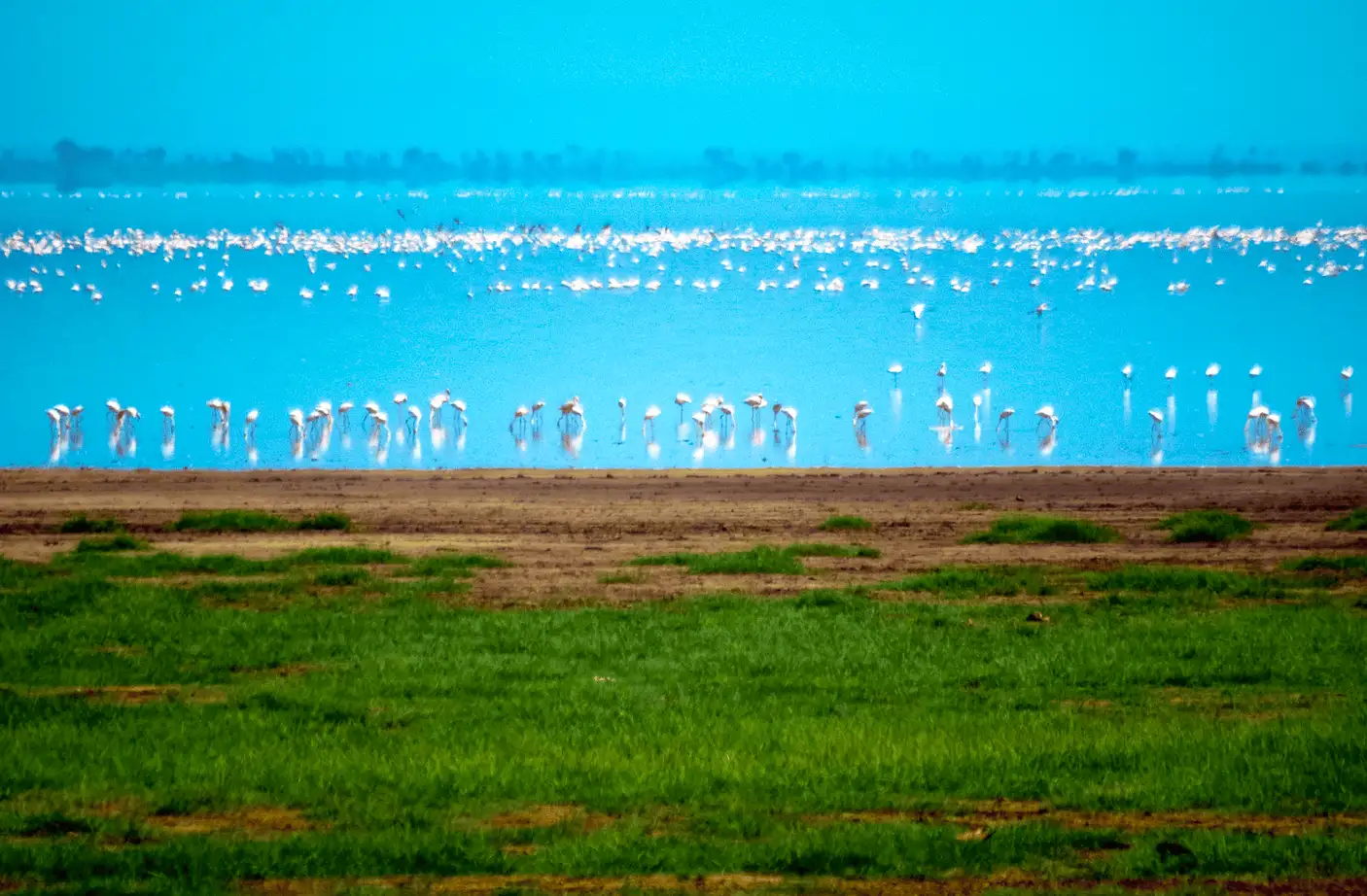
The lake supports fish, aquatic organisms and large populations of waterbirds. Depending on water conditions and season, flamingos may gather along sections of the shoreline.
Other aquatic birds commonly recorded include pelicans, storks, herons, cormorants, spoonbills, kingfishers and numerous species of ducks and waders.
Wetlands and Marshes
Wetland areas and marshes occur around parts of the lake, creating important habitat for hippos, waterbirds and other species associated with freshwater and seasonal wetlands.
Maji Moto Hot Springs
Toward the southern section of Lake Manyara National Park are geothermal springs commonly known as Maji Moto, meaning hot water in Swahili.
These springs are associated with the volcanic geology of the Great Rift Valley and create another fascinating geographical feature within the park.
Wildlife of Lake Manyara National Park
Lake Manyara supports an impressive variety of wildlife.
Frequently encountered species include:
- African elephants
- African buffaloes
- Giraffes
- Zebras
- Wildebeest
- Impalas
- Waterbucks
- Warthogs
- Hippos
- Olive baboons
- Blue monkeys
- Vervet monkeys
- Bushbucks
- Lions
- Leopards, although sightings are uncommon
- Spotted hyenas
The park is particularly well known for its extraordinarily large troops of olive baboons, which can sometimes be observed moving through forests and along roads in impressive numbers.
Birdlife in Lake Manyara National Park
Lake Manyara is considered one of the finest birdwatching destinations in Tanzania, with hundreds of bird species recorded in and around the park.
Bird enthusiasts may encounter:
- Flamingos
- Pelicans
- African fish eagles
- Hornbills
- Kingfishers
- Herons
- Storks
- Spoonbills
- Cormorants
- Bee eaters
- Raptors
- Migratory waterbirds
The mixture of forest, wetland, grassland and lake environments allows visitors to observe an exceptional variety of species within a single safari day.
Accessibility to Lake Manyara National Park
Lake Manyara National Park is conveniently located along Tanzania’s Northern Safari Circuit and can easily be reached from Arusha.
The park lies approximately 120 to 130 kilometers from Arusha City, with the road journey typically taking approximately two to three hours, depending on traffic, road conditions and stops along the route.
Much of the journey follows paved roads through northern Tanzania’s beautiful countryside.
The main entrance to Lake Manyara National Park is located close to the lively town of Mto wa Mbu, a culturally diverse community situated near the base of the Great Rift Valley escarpment.
Traveling From Arusha
Most visitors travel from Arusha in a private 4×4 safari vehicle accompanied by a professional safari guide.
A typical journey passes through areas such as:
- Meserani
- Makuyuni
- Mto wa Mbu
Travelers can visit the park as a full day safari from Arusha or stay overnight in the Lake Manyara, Mto wa Mbu or Karatu areas.
Traveling From Kilimanjaro International Airport
Travelers arriving at Kilimanjaro International Airport can reach Lake Manyara National Park after traveling through the Arusha region.
Depending on the itinerary, visitors may spend their first night in Arusha before beginning their safari the following morning.
Lake Manyara Airstrip
Travelers on luxury or fly in safari itineraries may also use nearby air connections depending on flight schedules and itinerary arrangements.
Domestic aviation can connect Northern Tanzania safari destinations with locations such as Serengeti and other regional airstrips.
Connecting Lake Manyara With Other Safari Destinations
One of Lake Manyara’s greatest advantages is its position within the Northern Circuit.
The park combines easily with:
- Tarangire National Park
- Ngorongoro Conservation Area
- Ngorongoro Crater
- Serengeti National Park
- Lake Eyasi
- Mto wa Mbu
- Arusha National Park
This makes Lake Manyara National Park an excellent destination for travelers planning anything from a three day Tanzania safari to an extended Northern Circuit wildlife adventure.
Best Time to Visit Lake Manyara National Park
Lake Manyara National Park is a year round safari destination, although wildlife viewing conditions, scenery and birdlife vary between seasons.
The best time to visit depends on whether your priority is wildlife viewing, birdwatching, lush scenery or photography.
June to October
The dry season between June and October is widely regarded as one of the best periods for traditional wildlife viewing.
During this period, rainfall is relatively limited and vegetation can become less dense, making some animals easier to spot.
Travelers visiting during the dry season may enjoy:
- Excellent wildlife viewing
- Comfortable safari temperatures
- Reduced rainfall
- Good road conditions
- Excellent photography opportunities
- Easier combinations with Serengeti and Ngorongoro safaris
This period is especially popular with travelers planning a classic Tanzania safari holiday.
November to December
The short rains normally begin around November and can continue into December.
The rainfall transforms the landscapes into vibrant shades of green while supporting new vegetation and increasing bird activity.
This period can be excellent for:
- Birdwatching
- Landscape photography
- Green season safaris
- Smaller visitor numbers in some periods
- Migratory bird sightings
January to February
January and February frequently provide warm conditions and excellent safari opportunities between the major rainy periods.
These months are attractive for travelers combining Lake Manyara with Ngorongoro Crater and Southern Serengeti, particularly during the broader wildebeest calving season.
March to May
March through May generally represents the main rainy season in northern Tanzania.
During this period, the park becomes exceptionally green and scenic.
Some roads may become more challenging following heavy rain, but visitors can enjoy a quieter atmosphere and spectacular landscapes.
The rainy season is particularly appealing for:
- Birdwatchers
- Nature photographers
- Travelers seeking fewer safari vehicles
- Green landscape photography
- Visitors interested in seasonal ecosystems
For classic wildlife safaris, June through October remains particularly popular, while birdwatchers and photographers may appreciate the wetter months when vegetation is lush and migratory birds are present.
Common Activities in Lake Manyara National Park
Lake Manyara National Park offers a variety of experiences that can be included in both day trips and longer Tanzania safari itineraries.
Game Drives
A Lake Manyara game drive is the primary activity enjoyed by most visitors.
Game drives travel through several ecological zones, beginning in the groundwater forest before moving through woodland, floodplains and lakeshore environments.
During a game drive, guests may encounter:
- Elephants
- Giraffes
- Buffaloes
- Zebras
- Wildebeest
- Hippos
- Baboons
- Monkeys
- Antelopes
- Lions
The diversity of habitats means that scenery changes frequently throughout the safari.
Professional guides from Martial Eagle Adventures help guests interpret animal behavior, identify bird species and understand the ecological relationships that make Lake Manyara unique.
Searching for Tree Climbing Lions
Lake Manyara National Park has long been associated with its famous tree climbing lions.
Although lions are wild animals and sightings can never be guaranteed, searching the acacia woodlands for these unusual predators remains an exciting part of a Lake Manyara safari.
Scientists and safari enthusiasts have proposed several explanations for the behavior, ranging from escaping insects to enjoying cooler temperatures and better viewpoints.
Whatever the reason, seeing a lion resting high in an acacia tree is a memorable wildlife encounter.
Birdwatching
Lake Manyara is an exceptional destination for birding.
Its combination of lake, marshland, groundwater forest and savannah supports both resident and migratory bird species.
A dedicated Lake Manyara birdwatching safari may focus on:
- Waterbirds
- Raptors
- Forest species
- Flamingos
- Pelicans
- Kingfishers
- Storks
- Herons
Birdwatching can be rewarding throughout the year, with particularly rich diversity during the green season.
Wildlife Photography
Lake Manyara’s landscape provides excellent opportunities for photographers.
Some of the most memorable photographic subjects include:
- Elephants walking through groundwater forest
- Giraffes beneath the Rift Valley escarpment
- Flamingos along the lakeshore
- Hippos in wetland areas
- Baboons interacting in large family groups
- Lions resting in acacia woodland
- Panoramic views of the Great Rift Valley
The changing combination of forest shadows, open plains, water and dramatic escarpment scenery gives photographers an impressive variety of compositions.
Cultural Experiences Around Mto wa Mbu
Lake Manyara National Park can easily be combined with cultural activities in nearby Mto wa Mbu.
Mto wa Mbu is known for its remarkable cultural diversity and agricultural landscapes.
Depending on the itinerary, visitors may participate in experiences such as:
- Village walks
- Local market visits
- Traditional food experiences
- Banana plantation visits
- Local art and craft experiences
- Community based cultural tours
Combining wildlife and culture creates a deeper understanding of life in northern Tanzania beyond the national parks.
Cycling and Outdoor Experiences Around Lake Manyara
Selected experiences outside the national park can include cycling through communities and agricultural areas around Mto wa Mbu.
These activities offer a refreshing addition to conventional vehicle based safari programs.
Travelers may cycle past:
- Farms
- Banana plantations
- Local villages
- Rice fields
- Markets
- Scenic Rift Valley landscapes
These excursions are particularly suitable for travelers interested in active and cultural tourism.
Accommodation Options Around Lake Manyara National Park
Lake Manyara offers accommodation options suitable for almost every travel style, from luxury safari lodges to comfortable mid range properties and budget accommodations.
Many lodges are located near Mto wa Mbu, along the Rift Valley escarpment and toward Karatu.
Luxury Safari Lodges
Luxury properties around Lake Manyara offer high levels of comfort, beautiful locations and personalized hospitality.
Guests may enjoy:
- Spacious rooms or suites
- Private verandas
- Swimming pools
- Fine dining
- Scenic Rift Valley views
- Spa facilities
- Personalized safari services
- Sundowner experiences
Some luxury properties are positioned along the escarpment, providing extraordinary panoramic views over Lake Manyara and surrounding landscapes.
Tented Safari Camps
Tented camps provide a traditional safari atmosphere while maintaining modern comfort.
Depending on the property, facilities may include:
- En suite bathrooms
- Comfortable beds
- Private terraces
- Restaurant facilities
- Campfire areas
- Bush inspired dining experiences
Tented accommodation is ideal for travelers seeking an immersive African safari atmosphere.
Mid Range Lodges
Mid range safari lodges provide excellent comfort and value.
Typical facilities include:
- En suite rooms
- Restaurants
- Swimming pools
- Gardens
- Wi Fi
- Family accommodation
- Safari vehicle access
These properties are popular with families, couples and groups traveling on professionally organized Tanzania safari packages.
Accommodation in Mto wa Mbu
Mto wa Mbu offers several guesthouses, lodges and small hotels suitable for travelers interested in cultural exploration and convenient access to Lake Manyara National Park.
Staying in the area allows visitors to combine safari activities with local community experiences.
Accommodation in Karatu
Many travelers choose to stay around Karatu, which lies between Lake Manyara and Ngorongoro.
Karatu has become one of Northern Tanzania’s most popular safari accommodation hubs because it provides excellent access to:
- Lake Manyara National Park
- Ngorongoro Conservation Area
- Ngorongoro Crater
- Mto wa Mbu
- Highlands and coffee farms
This location is particularly convenient for multi day Northern Circuit itineraries.
Why Visit Lake Manyara National Park
Lake Manyara may be smaller than Tanzania’s most famous national parks, but its extraordinary variety makes it one of the most rewarding destinations on the Northern Circuit.
Within a single safari, visitors can experience dense forest, open grasslands, wetlands, alkaline lake environments and dramatic Rift Valley scenery.
Lake Manyara National Park is particularly recommended for travelers interested in:
- Elephant viewing
- Tree climbing lions
- Birdwatching
- Great Rift Valley scenery
- Wildlife photography
- Family safaris
- Short Tanzania safaris
- Northern Circuit safari combinations
- Cultural experiences in Mto wa Mbu
- Nature and landscape photography
The park also provides an excellent contrast to Tarangire, Ngorongoro and Serengeti, making every destination within a longer safari itinerary feel different.
Combine Lake Manyara With a Northern Tanzania Safari
A Lake Manyara National Park safari becomes even more rewarding when combined with other famous destinations across Northern Tanzania.
One popular safari route includes:
- Arusha
- Tarangire National Park
- Lake Manyara National Park
- Ngorongoro Crater
- Serengeti National Park
This route introduces travelers to several contrasting ecosystems and some of Africa’s most famous wildlife areas.
Visitors with additional time can also include:
- Lake Eyasi and Hadzabe cultural experiences
- Mount Kilimanjaro
- Mount Meru
- Arusha National Park
- Zanzibar beach holidays
At Martial Eagle Adventures, every itinerary can be customized according to your number of travel days, accommodation preferences, safari budget, wildlife interests and preferred travel style.
Plan Your Lake Manyara Safari With Martial Eagle Adventures
Experience the forests, wildlife, flamingo filled wetlands and breathtaking Great Rift Valley scenery of Lake Manyara National Park with Martial Eagle Adventures.
Based in Arusha, Tanzania, we specialize in tailor made Tanzania safaris designed around authentic wildlife experiences, knowledgeable local guiding and carefully selected destinations throughout the Northern Safari Circuit.
Whether you are planning a Lake Manyara day trip from Arusha, a family safari, honeymoon adventure, photography safari or a multi day journey through Tarangire, Ngorongoro and Serengeti, our team can create an itinerary that allows you to experience Tanzania at your own pace.
Stand beneath the towering Rift Valley escarpment, watch elephants wander through ancient forests, listen to thousands of birds around the lakeshore and search the acacia branches for Lake Manyara’s legendary lions.
Begin your Lake Manyara National Park safari with Martial Eagle Adventures and discover a remarkable corner of Tanzania where forests, wildlife, water and the Great Rift Valley come together in one unforgettable landscape.
Read Reviews


Follow us
- Martial Eagle Adventures
- @martialeagleadventures
- +255 652 283 399
- +255 652 283 399
- sales@martialeagleadventures.com
- Arusha, Tanzania
We Accept