Tour Type
Mountain Climbing
Tour Duration
10 Days 9 Nights
Min. No of Pax
1

Tour Price

Budget
On request
Mid-range
On request
Luxury
On request
The Price Includes
- Professional Kilimanjaro mountain guide
- Assistant mountain guides where required according to group size
- Experienced mountain cook
- Professional mountain porters
- Kilimanjaro National Park entrance fees
- Camping fees
- Rescue fees charged by the park authority
- Lemosho Route trekking permits
- Mountain camping accommodation
- Quality trekking tents
- Dining tent where provided
- Dining tables and chairs where provided
- Three prepared meals per day while trekking
- Drinking water during the mountain expedition
- Tea and coffee during the trek
- Transport from Arusha to Londorossi Gate
- Transport from Mweka Gate back to Arusha
- Airport transfers according to the confirmed itinerary
- Accommodation in Arusha before the climb according to the confirmed package
- Accommodation in Arusha after the climb according to the confirmed package
- Pre climb briefing
- Mountain safety monitoring
- First aid equipment
- Emergency oxygen where included in the expedition safety arrangement
- Pulse oximeter monitoring where used by the guide team
- Summit certificate for qualifying climbers
- Government taxes related to included services
The Price Excludes
- International flights
- Domestic flights unless specifically stated
- Tanzania visa fees
- Travel insurance
- High altitude trekking insurance
- Personal trekking equipment
- Sleeping bag unless specifically included
- Hiking boots
- Trekking poles unless specifically included
- Personal clothing
- Toiletries
- Laundry services
- Alcoholic beverages
- Soft drinks
- Meals in Arusha unless specifically included
- Personal snacks and energy products
- Personal medication
- Vaccinations
- Medical expenses
- Emergency evacuation costs not covered by park rescue services or travel insurance
- Telephone costs
- Internet costs
- Additional hotel nights caused by flight delays or schedule changes
- Tanzania safari extensions
- Zanzibar holiday extensions
- Optional activities
- Tips for mountain guides, cooks and porters
- Personal expenses of any nature
Tour Overview

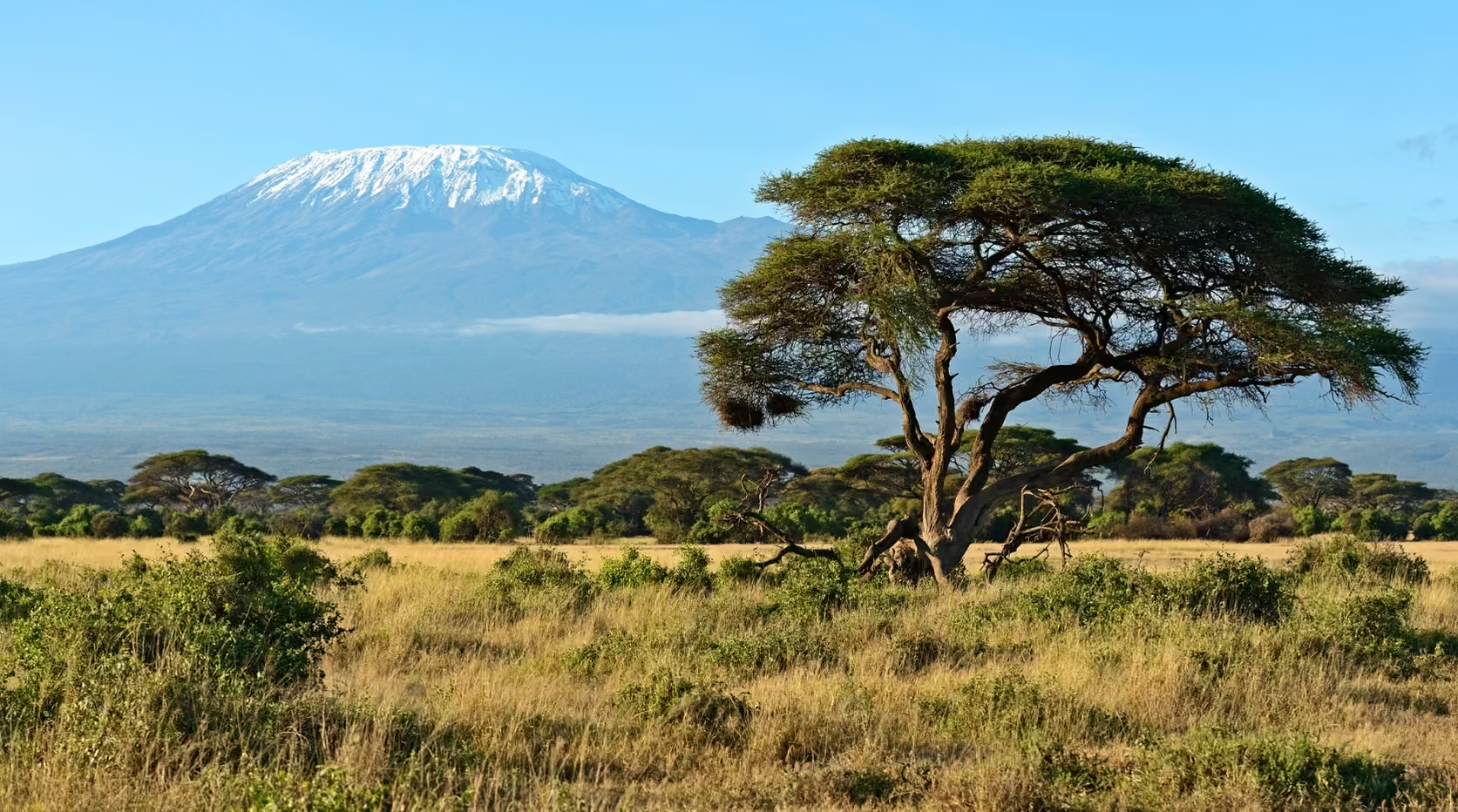
The 10 Days Lemosho Route with 8 Days Hiking is one of the most scenic, gradual and highly rewarding ways to climb Mount Kilimanjaro in Tanzania. This carefully designed itinerary combines two travel days in Arusha with eight full days of trekking on Mount Kilimanjaro, creating a complete high altitude adventure from arrival to summit and final descent.
Operated by Martial Eagle Adventures, a professional Tanzania tour company based in Arusha, this journey is designed for travelers seeking a beautiful wilderness approach, excellent acclimatization opportunities, dramatic volcanic landscapes and a realistic chance to enjoy the mountain without rushing through the early stages.
The Lemosho Route begins on the remote western side of Mount Kilimanjaro and is widely recognized for its impressive scenery, quieter lower slopes and gradual altitude progression. The route enters Kilimanjaro through the forests around Londorossi Gate before continuing to the Lemosho trailhead and then through the green rainforest toward Mti Mkubwa Camp, sometimes called Big Tree Camp.
From the rainforest, the trail rises into the heath and moorland zone before opening onto the spectacular Shira Plateau, one of Kilimanjaro’s most important geological features. This immense high altitude plateau was formed by the collapse of an ancient volcanic cone and provides some of the most expansive views encountered anywhere on the mountain.
Climbers then continue across the Shira Plateau toward Shira 1 Camp and Shira 2 Camp, gradually increasing elevation and allowing the body additional time to adapt before the more demanding sections around Lava Tower, Barranco and Barafu.
One of the major advantages of the 8 day Lemosho Route itinerary is its strong acclimatization profile. Rather than making large and rapid altitude gains, the route uses a carefully staged progression that allows trekkers to spend more nights at increasing elevations.
This is especially important because altitude is one of the greatest challenges on Mount Kilimanjaro. Physical fitness is important, but even strong and experienced hikers can be affected by reduced oxygen at higher elevations. A gradual itinerary helps the body adapt more effectively than a rushed ascent.
The Lemosho Route is particularly popular among travelers searching for the best Kilimanjaro climbing route, scenic Mount Kilimanjaro trekking itinerary, 8 day Lemosho Route climb, Tanzania mountain climbing tours and Kilimanjaro summit expeditions from Arusha because it combines natural beauty with a well balanced altitude profile.
After crossing the Shira Plateau, climbers continue toward one of the most important acclimatization landmarks on the mountain, Lava Tower at approximately 4,600 meters above sea level.
This stage is significant because trekkers climb to a much higher elevation during the day before descending to Barranco Camp at approximately 3,950 meters. This technique follows the useful acclimatization principle commonly known as climb high and sleep low.
The Lava Tower area is characterized by dramatic volcanic rock formations and harsh alpine desert scenery. From here, the route descends into the Great Barranco Valley, one of the most visually impressive locations on Kilimanjaro.
Barranco Camp sits beneath the famous Barranco Wall, a steep volcanic rock face that can appear intimidating when viewed from below.
The next morning, climbers ascend the Barranco Wall using a series of natural rock steps and ledges. Although some scrambling is required, the wall is not generally considered technical rock climbing, and no standard climbing ropes are needed for the normal route.
After reaching the top of the Barranco Wall, the trail crosses several ridges and valleys before arriving at Karanga Camp at approximately 4,035 meters.
Karanga provides another valuable acclimatization night before the final approach to Barafu Camp at approximately 4,640 meters.
Barafu Camp is the main summit staging point for climbers approaching Uhuru Peak from the southern side of Kilimanjaro. The environment here is cold, exposed and almost completely devoid of vegetation.
Trekkers generally reach Barafu during the day, eat, hydrate, prepare summit equipment and rest for several hours before beginning the final ascent close to midnight.
The summit climb is the most demanding stage of the entire expedition.
In darkness, climbers follow a steep trail through loose volcanic scree toward Stella Point at approximately 5,756 meters, located on the rim of Kilimanjaro’s crater.
The climb can take many hours and requires patience, mental determination and a very slow walking rhythm.
From Stella Point, trekkers continue along the crater rim toward Uhuru Peak at 5,895 meters above sea level.
Uhuru Peak is the highest point on Mount Kilimanjaro, the highest point in Tanzania and the highest point on the African continent.
Reaching the summit is often an emotional and unforgettable moment.
Depending on weather, visibility and timing, climbers may watch the sunrise illuminate the glaciers, crater rim and surrounding Tanzanian landscape.
After spending a limited time at Uhuru Peak, the group begins a long descent through Stella Point and Barafu toward Mweka Camp, where thicker air and warmer conditions provide welcome relief after the extreme altitude of the summit.
The final trekking day continues through rainforest toward Mweka Gate, where the expedition officially ends.
Successful climbers normally complete park procedures and receive the appropriate summit certificate before returning to Arusha.
The 10 Days Lemosho Route with 8 Days Hiking is especially suitable for travelers who value scenic landscapes, gradual altitude gain, diverse vegetation zones, a remote starting point and a high quality Kilimanjaro trekking experience.
Throughout the climb, Martial Eagle Adventures provides experienced mountain guides, porters, cooks and logistical support to help make the journey safe, organized and memorable.
This itinerary is ideal for travelers researching Kilimanjaro Lemosho Route packages, 8 day Kilimanjaro climbs, Mount Kilimanjaro tours from Arusha, Uhuru Peak expeditions, Tanzania trekking holidays and high altitude adventure travel in East Africa.
Tour At A Glance
- Destination: Mount Kilimanjaro, Tanzania
- Route: Lemosho Route
- Total Tour Duration: 10 Days
- Mountain Hiking Duration: 8 Days
- Highest Point: Uhuru Peak
- Maximum Elevation: 5,895 meters above sea level
- Starting Gate: Londorossi Gate
- Starting Trail Area: Lemosho Glades
- Finishing Gate: Mweka Gate
- Starting City: Arusha, Tanzania
- Mountain Accommodation: Tented camping
- Difficulty Level: Challenging high altitude trekking
- Main Landscapes: Rainforest, heath, moorland, Shira Plateau, alpine desert, volcanic valleys, crater rim and arctic summit zone
- Major Acclimatization Point: Lava Tower
- Primary Goal: Reach Uhuru Peak, the summit of Mount Kilimanjaro
Day To day
DAY 1: ARRIVAL IN ARUSHA AND KILIMANJARO TREKKING BRIEFING
Your 10 Days Lemosho Route Kilimanjaro adventure begins when you arrive in northern Tanzania and meet a representative from Martial Eagle Adventures.
Travelers arriving through Kilimanjaro International Airport are transferred to their accommodation in Arusha.
The drive from Kilimanjaro International Airport to central Arusha is approximately 50 to 55 kilometers and normally takes around 1 to 1.5 hours, depending on traffic and hotel location.
Arusha lies at approximately 1,400 meters above sea level beneath Mount Meru and is one of Tanzania’s most important tourism centers.
The city serves as a major departure point for Mount Kilimanjaro climbs, Serengeti safaris, Ngorongoro tours, Tarangire safaris and other Northern Tanzania adventures.
After checking into your hotel, you meet your Kilimanjaro mountain guide for a detailed pre climb briefing.
The briefing covers the Lemosho Route itinerary, daily hiking distances, elevation profile, mountain weather, camping arrangements, safety procedures, hydration, altitude awareness and summit strategy.
Your guide may also inspect your personal trekking equipment to ensure you have suitable hiking boots, waterproof clothing, insulated summit layers, gloves, head protection and sleeping equipment.
Any missing gear can normally be identified during this stage so that final arrangements can be made before departure.
The remainder of the day is dedicated to rest and preparation.
You are encouraged to drink sufficient water, eat properly and get a good night’s sleep before starting the trek.
Additional Activities That Can Be Arranged
- Arusha city tour
- Local market visit
- Cultural Heritage Centre visit
- Trekking equipment rental
- Souvenir shopping
- Local restaurant experience
- Short walking tour
- Relaxation at your hotel
DAY 2: ARUSHA TO LONDOROSSI GATE AND TREK TO MTI MKUBWA CAMP
Starting Elevation at Londorossi Gate: Approximately 2,100 to 2,250 meters
Trailhead Elevation: Approximately 2,350 meters
Mti Mkubwa Camp Elevation: Approximately 2,650 to 2,800 meters
Hiking Distance: Approximately 6 to 7 kilometers
Hiking Time: Approximately 3 to 4 hours
Vegetation Zone: Montane Rainforest
After breakfast in Arusha, your Martial Eagle Adventures team collects you from the hotel for the drive toward Londorossi Gate, located on the western side of Mount Kilimanjaro.
The road journey from Arusha can take approximately 3 to 4 hours, depending on road conditions, traffic and the exact route used.
The drive passes through rural northern Tanzania, where agricultural land, villages and expansive views gradually give way to the forested lower slopes of Kilimanjaro.
Upon reaching Londorossi Gate, climbers complete park registration procedures while porters organize expedition equipment, food and camping supplies.
After registration, the group usually continues by vehicle toward the Lemosho trailhead, where the trekking section officially begins.
The first stage enters a dense and atmospheric montane rainforest.
The trail passes through lush vegetation dominated by tall indigenous trees, giant ferns, moss covered branches, vines and thick forest undergrowth.
The rainforest can be humid and wet, and the trail may become slippery after rainfall.
Wildlife sightings vary, but the western forests of Kilimanjaro provide habitat for monkeys, birds and other smaller forest species.
The trek to Mti Mkubwa Camp, commonly known as Big Tree Camp, covers approximately 6 to 7 kilometers and normally requires around 3 to 4 hours.
This relatively short first trekking day allows climbers to ease into the expedition after the road transfer and park procedures.
Upon reaching camp, your mountain crew will normally have tents prepared.
Dinner is served in camp, followed by an evening briefing about the next day’s ascent.
Additional Experiences Along This Stage
- Rainforest photography
- Birdwatching
- Wildlife observation
- Indigenous vegetation interpretation
- Forest nature photography
- Short acclimatization walk near camp
- Evening relaxation in the rainforest
- Introduction to Kilimanjaro camping life
DAY 3: MTI MKUBWA CAMP TO SHIRA 1 CAMP
Starting Elevation: Approximately 2,650 to 2,800 meters
Shira 1 Camp Elevation: Approximately 3,500 meters
Hiking Distance: Approximately 7 to 8 kilometers
Hiking Time: Approximately 5 to 6 hours
Vegetation Zones: Rainforest, Heath and Moorland
After breakfast at Mti Mkubwa Camp, the trail continues upward through the final sections of montane rainforest.
As elevation increases, the forest gradually becomes thinner and eventually gives way to the more open heath and moorland zone.
This change in vegetation is one of the most noticeable transitions on the Lemosho Route.
Tall trees disappear and are replaced by giant heathers, alpine grasses, shrubs and other plants adapted to cooler temperatures and stronger mountain winds.
The trail becomes increasingly open, allowing broader views across the western slopes of Kilimanjaro.
Climbers gain approximately 700 to 850 meters of elevation during the day.
The route covers around 7 to 8 kilometers and usually requires approximately 5 to 6 hours, depending on trail conditions and group pace.
As you climb higher, the immense volcanic landscapes of Kilimanjaro gradually become more visible.
Eventually the trail reaches the western edge of the Shira Plateau, one of the most important geological landmarks on the mountain.
The Shira Plateau is the remnant of an ancient volcanic caldera and creates a broad elevated landscape beneath the higher Kibo cone.
The day’s destination is Shira 1 Camp at approximately 3,500 meters above sea level.
On clear afternoons, climbers can enjoy striking views across the plateau and toward Kilimanjaro’s upper slopes.
This is also the first night where the effects of higher altitude may become more noticeable.
Your guides encourage slow walking, proper hydration and good communication regarding any altitude related symptoms.
Additional Experiences Along This Stage
- Shira Plateau photography
- Mount Meru views when conditions are clear
- Moorland vegetation observation
- High altitude landscape photography
- Short acclimatization walk
- Sunset viewing
- Stargazing
- Mountain geology interpretation
DAY 4: SHIRA 1 CAMP TO SHIRA 2 CAMP
Starting Elevation: Approximately 3,500 meters
Shira 2 Camp Elevation: Approximately 3,850 meters
Hiking Distance: Approximately 7 to 10 kilometers
Hiking Time: Approximately 4 to 6 hours
Vegetation Zone: Moorland and Alpine Transition
Today’s trek continues across the vast and visually impressive Shira Plateau toward Shira 2 Camp.
This section is generally more gradual than the previous day’s climb and provides an important opportunity for acclimatization.
The trail crosses open high altitude terrain with increasingly limited vegetation.
Views toward Kibo, Kilimanjaro’s central and highest volcanic cone, become more dramatic as you move eastward across the plateau.
Behind the group, Mount Meru may sometimes be visible rising above the surrounding plains and clouds.
The route covers approximately 7 to 10 kilometers, depending on the exact trail variation used, and usually takes around 4 to 6 hours.
The sleeping elevation increases to approximately 3,850 meters at Shira 2 Camp.
Because the altitude gain is moderate, this day plays an important role in preparing climbers for the higher elevations encountered around Lava Tower on the following stage.
Upon arriving at Shira 2 Camp, trekkers have time to rest, eat, hydrate and enjoy the surrounding mountain scenery.
A short acclimatization walk may be recommended depending on weather conditions and group health.
The Shira Plateau is often especially beautiful around sunset, when changing light can reveal dramatic views across the volcanic landscape.
Additional Experiences Along This Stage
- Shira Plateau exploration
- Kibo photography
- Mount Meru photography
- Acclimatization walking
- Volcanic landscape observation
- Sunset photography
- Stargazing
- High altitude ecology interpretation
DAY 5: SHIRA 2 CAMP TO LAVA TOWER AND BARRANCO CAMP
Starting Elevation: Approximately 3,850 meters
Highest Point at Lava Tower: Approximately 4,600 meters
Barranco Camp Elevation: Approximately 3,950 meters
Hiking Distance: Approximately 10 kilometers
Hiking Time: Approximately 6 to 8 hours
Vegetation Zone: Alpine Desert
Day five is one of the most important acclimatization stages on the Lemosho Route.
After breakfast, the trail continues eastward toward the upper slopes of Kibo.
The landscape gradually changes from moorland into the stark alpine desert zone.
Vegetation becomes increasingly scarce as temperatures fall and the environment becomes drier and more exposed.
The trail climbs toward Lava Tower at approximately 4,600 meters above sea level.
This dramatic volcanic formation is one of the major landmarks on the southern circuit of Kilimanjaro.
The climb to Lava Tower exposes trekkers to a significantly higher elevation than their previous sleeping camp.
Depending on group pace and weather conditions, lunch may be taken around the Lava Tower area.
This high point is particularly important for acclimatization because the group later descends to sleep at a lower elevation.
From Lava Tower, the trail descends into the Great Barranco Valley.
As elevation drops, some vegetation gradually returns, including distinctive giant senecios in suitable areas.
The destination is Barranco Camp at approximately 3,950 meters above sea level.
The complete trek covers around 10 kilometers and normally requires 6 to 8 hours.
Although Barranco Camp is only slightly higher than Shira 2, climbers will have spent several hours close to 4,600 meters.
This makes the day a classic example of the climb high and sleep low acclimatization technique.
Barranco Camp lies directly beneath the dramatic Barranco Wall, which dominates the next morning’s route.
Additional Experiences Along This Stage
- Lava Tower photography
- High altitude acclimatization
- Alpine desert exploration
- Volcanic geology interpretation
- Barranco Valley photography
- Giant senecio observation
- Views of the Western Breach
- Sunset photography from Barranco Camp
- Evening briefing about the Barranco Wall
DAY 6: BARRANCO CAMP TO KARANGA CAMP VIA BARRANCO WALL
Starting Elevation: Approximately 3,950 meters
Barranco Wall Highest Area: Approximately 4,200 meters
Karanga Camp Elevation: Approximately 4,035 meters
Hiking Distance: Approximately 5 to 6 kilometers
Hiking Time: Approximately 4 to 5 hours
Vegetation Zone: Alpine Desert
After breakfast at Barranco Camp, the day’s trek begins with one of the most famous sections of the entire Mount Kilimanjaro Lemosho Route, the Barranco Wall.
From below, the wall appears steep and dramatic.
The ascent normally takes around 1 to 2 hours, depending on group pace and trail traffic.
Trekkers use a series of natural rock steps and ledges, occasionally using their hands for balance.
Although the climb involves scrambling, it is not normally considered technical rock climbing and no standard ropes are required.
One of the best known points on the ascent is a narrow section where climbers move carefully around a rock face.
Your guides provide instructions and assistance throughout the climb.
At the top of the Barranco Wall, you are rewarded with panoramic views across Kilimanjaro’s southern slopes.
The trail then continues across a series of ridges and valleys.
You descend toward the Karanga Valley before climbing once more toward Karanga Camp at approximately 4,035 meters.
The full trekking distance is approximately 5 to 6 kilometers, normally requiring around 4 to 5 hours.
This relatively short stage is highly valuable for continued acclimatization.
It allows the body another night above 4,000 meters before the final move toward Barafu Camp.
Karanga Camp is surrounded by rugged high altitude terrain and provides dramatic views toward the upper slopes of Kibo.
Additional Experiences Along This Stage
- Barranco Wall scrambling
- Mountain photography
- Karanga Valley views
- High altitude landscape observation
- Kibo photography
- Acclimatization walking
- Summit preparation discussion
- Sunset viewing
- Rest and recovery at Karanga Camp
DAY 7: KARANGA CAMP TO BARAFU CAMP
Starting Elevation: Approximately 4,035 meters
Barafu Camp Elevation: Approximately 4,640 meters
Hiking Distance: Approximately 4 to 5 kilometers
Hiking Time: Approximately 3 to 4 hours
Vegetation Zone: High Alpine Desert
Today’s trek leads toward Barafu Camp, the final major staging point before the summit attempt.
After breakfast at Karanga Camp, the trail climbs gradually through increasingly barren terrain.
Vegetation becomes extremely limited as the route enters the higher alpine desert.
The hiking distance is approximately 4 to 5 kilometers, usually requiring around 3 to 4 hours.
Although the distance is short, the higher elevation means movement should remain slow and controlled.
At approximately 4,640 meters above sea level, Barafu Camp is cold, rocky and exposed.
The name Barafu means ice in Swahili, reflecting the freezing conditions often experienced at this altitude.
Upon arrival, climbers normally have lunch before resting.
Your guide conducts a detailed summit briefing covering clothing, hydration, snacks, trekking poles, headlamp use, pace and expected conditions.
Climbers are advised to organize all summit equipment during daylight.
Items commonly prepared include thermal layers, insulated jackets, warm gloves, head protection, headlamps, water and energy snacks.
An early dinner is normally served.
Afterward, trekkers attempt to sleep or rest for several hours.
The summit climb usually begins around midnight, although the exact time depends on weather, group pace and guiding strategy.
Additional Experiences Along This Stage
- High altitude photography
- Summit preparation
- Equipment inspection
- Rest and hydration
- Views toward Mawenzi when conditions are clear
- Sunset observation
- Short acclimatization walks
- Final summit briefing
DAY 8: BARAFU CAMP TO STELLA POINT, UHURU PEAK AND DESCEND TO MWEKA CAMP
Starting Elevation: Approximately 4,640 meters
Stella Point Elevation: Approximately 5,756 meters
Uhuru Peak Elevation: 5,895 meters
Mweka Camp Elevation: Approximately 3,100 meters
Total Hiking Distance: Approximately 15 to 17 kilometers
Total Hiking Time: Approximately 12 to 16 hours
Vegetation Zones: Arctic Summit Zone to Rainforest Transition
This is the longest, most difficult and most rewarding day of the entire 10 Days Lemosho Route Kilimanjaro expedition.
The summit attempt usually begins around midnight.
Climbers leave Barafu Camp wearing multiple layers of warm clothing and follow their guides slowly upward through darkness.
The trail is steep and consists largely of loose volcanic scree.
The thin air makes movement increasingly demanding.
Your guides maintain a slow and controlled rhythm to help conserve energy and support acclimatization.
The ascent continues for several hours toward Stella Point at approximately 5,756 meters on the crater rim.
Reaching Stella Point is a major achievement.
Depending on pace and conditions, climbers may reach this area around sunrise.
From Stella Point, the trail follows the crater rim toward Uhuru Peak.
The gradient becomes more gradual, but the extreme altitude makes every step physically demanding.
Glaciers, snowfields and volcanic crater scenery may be visible depending on weather conditions.
Eventually, after approximately 1 to 2 additional hours, climbers reach Uhuru Peak at 5,895 meters above sea level.
This is the highest point on Mount Kilimanjaro, the highest point in Tanzania and the highest point in Africa.
Climbers normally spend a limited period at the summit because of the extreme elevation, low temperatures and reduced oxygen.
There is time for photographs and a brief celebration before beginning the descent.
The group returns to Barafu Camp, where trekkers generally stop for food and a short rest.
Afterward, the descent continues toward Mweka Camp at approximately 3,100 meters.
The complete hiking day may require approximately 12 to 16 hours and covers around 15 to 17 kilometers.
The dramatic drop in elevation means the air becomes thicker and temperatures gradually become warmer.
By the time you reach Mweka Camp, the lower altitude usually provides considerable relief.
Dinner is served before a well deserved night’s rest.
Additional Experiences Along This Stage
- Stella Point achievement
- Uhuru Peak summit experience
- Sunrise from Kilimanjaro crater rim
- Glacier photography
- Summit photography
- Arctic zone scenery
- High altitude volcanic landscapes
- Celebration with your mountain team
- Scenic descent through multiple ecological zones
DAY 9: MWEKA CAMP TO MWEKA GATE AND RETURN TO ARUSHA
Starting Elevation: Approximately 3,100 meters
Mweka Gate Elevation: Approximately 1,640 meters
Hiking Distance: Approximately 10 kilometers
Hiking Time: Approximately 3 to 4 hours
Drive to Arusha: Approximately 2 to 3 hours
After breakfast at Mweka Camp, you begin the final trekking stage of your 8 day Lemosho Route climb.
The trail descends steadily through increasingly lush vegetation.
As altitude decreases, the alpine environment gives way to the rich montane rainforest that covers the lower slopes of Kilimanjaro.
The contrast is remarkable after several days in the dry and barren upper regions.
Tall trees, ferns, vines, mosses and humid forest conditions once again surround the trail.
The route covers approximately 10 kilometers from Mweka Camp to Mweka Gate and normally takes around 3 to 4 hours.
The path can be wet and slippery, particularly during or after rainfall, so trekking poles remain useful.
Eventually you reach Mweka Gate at approximately 1,640 meters above sea level.
Here, your Mount Kilimanjaro trekking adventure officially ends.
Final park procedures are completed, and successful climbers normally receive the appropriate summit certificate.
This is also an important moment to celebrate with the mountain team that has supported your expedition.
Afterward, a Martial Eagle Adventures vehicle transfers you back to Arusha.
The drive normally takes approximately 2 to 3 hours, depending on traffic and hotel location.
Upon reaching your accommodation, you can enjoy a warm shower, fresh clothing and a well deserved rest after completing one of Africa’s great mountain adventures.
Additional Activities That Can Be Arranged
- Celebration dinner in Arusha
- Massage or wellness treatment
- Souvenir shopping
- Local restaurant experience
- Arusha city tour
- Tanzania wildlife safari extension
- Zanzibar beach extension
- Materuni Waterfalls excursion
DAY 10: DEPARTURE FROM ARUSHA OR CONTINUE YOUR TANZANIA ADVENTURE
After breakfast, your 10 Days Lemosho Route Kilimanjaro adventure with Martial Eagle Adventures comes to an end.
Depending on your flight schedule, you may have additional time to relax in Arusha before being transferred to Kilimanjaro International Airport.
For many travelers, climbing Kilimanjaro is only one part of a larger Tanzania holiday.
Arusha provides easy access to some of Africa’s most famous wildlife destinations.
You can continue your adventure with a Tanzania safari to Serengeti National Park, Ngorongoro Crater, Tarangire National Park or Lake Manyara National Park.
Another popular option is to travel to Zanzibar for a relaxing beach holiday after the physical demands of Kilimanjaro.
Martial Eagle Adventures can customize your post climb extension according to your available time, preferred level of comfort and travel interests.
Optional Post Climb Extensions
- Serengeti National Park safari
- Ngorongoro Crater safari
- Tarangire National Park safari
- Lake Manyara National Park safari
- Arusha National Park tour
- Zanzibar beach holiday
- Stone Town cultural tour
- Materuni Waterfalls and coffee tour
- Chemka Hot Springs excursion
- Maasai cultural experience
At Martial Eagle Adventures, every journey is thoughtfully crafted around you. We move beyond rigid schedules to offer flexible, tailor-made itineraries shaped by your interests, preferred pace, and travel style. Our experienced travel specialists work closely with you from the very beginning, designing a personalized adventure that reflects the true spirit of Tanzania. This is not just a trip, it is your journey, your story, and an unforgettable experience that goes above and beyond expectations.
Read Reviews

Follow us
- Martial Eagle Adventures
- @martialeagleadventures
- +255 652 283 399
- +255 652 283 399
- sales@martialeagleadventures.com
- Arusha, Tanzania
We Accept