
Katavi National Park

About Katavi National Park

Discover Katavi National Park With Martial Eagle Adventures
Far from Tanzania’s busiest safari routes, deep within the remote landscapes of western Tanzania, Katavi National Park protects one of Africa’s most powerful wilderness experiences. Vast floodplains stretch toward distant woodland, enormous herds of buffalo gather around shrinking water sources, elephants wander through miombo forests, lions patrol the plains and extraordinary concentrations of hippos and crocodiles crowd the remaining pools as the dry season intensifies.
For travelers searching for an off the beaten path Tanzania safari, Katavi represents something increasingly rare: immense wilderness with very few visitors. While Serengeti and Ngorongoro attract travelers from around the world, Katavi remains remote, wild and remarkably uncrowded. Safari vehicles are few, lodges are limited and wildlife encounters often unfold without another vehicle in sight.
Katavi is especially famous for its dramatic dry season wildlife concentrations. The Katuma River, Lake Chada, Lake Katavi and Katisunga floodplain form the ecological heart of the park, providing critical water and grazing areas for thousands of animals. As seasonal wetlands begin to dry, wildlife gathers around the remaining water, creating exceptional opportunities to observe buffaloes, elephants, hippos, crocodiles, lions, leopards, spotted hyenas, giraffes, zebras and numerous antelope species.
The destination is particularly rewarding for experienced safari travelers, photographers, wildlife enthusiasts and visitors who value exclusivity and raw wilderness more than conventional luxury.
At Martial Eagle Adventures, based in Arusha, Tanzania, we create customized Katavi National Park safaris and Western Tanzania safari itineraries for travelers ready to explore one of the country’s wildest and least visited protected areas.
History of Katavi National Park
The landscapes surrounding Katavi have supported wildlife and human communities for generations. The region’s rivers, seasonal lakes, floodplains and woodlands provided water, grazing areas and natural resources long before the establishment of formal conservation boundaries.
The park also carries cultural significance connected with local traditions. The wider Katavi region has historically been associated with beliefs, stories and sacred places linked to communities living around these landscapes.
Formal conservation developed gradually during the twentieth century as the ecological importance of western Tanzania became increasingly recognized.
Katavi National Park was established in 1974, initially protecting a smaller area than the park visitors experience today. Its boundaries were subsequently expanded, eventually creating a protected wilderness covering thousands of square kilometers.
The expansion helped protect critical habitats surrounding the Katuma River and seasonal floodplains while strengthening conservation connections with the wider ecosystems of western Tanzania.
Katavi’s remote location has historically limited mass tourism. While this has made tourism development more challenging, it has also helped preserve the park’s remarkable sense of wilderness.
Important historical and conservation highlights include:
- Establishment as a national park in 1974
- Subsequent expansion of the protected area
- Conservation of the Katuma River ecosystem
- Protection of major seasonal floodplains
- Preservation of important elephant and buffalo habitats
- Protection of predator populations
- Conservation of miombo woodland
- Growing recognition as a premium remote safari destination
- Continued importance within the wider western Tanzania ecosystem
Today, Katavi represents one of Tanzania’s most valuable wilderness areas and an outstanding destination for travelers searching for an authentic and uncrowded African safari.
Geography Size and Ecology of Katavi National Park
Katavi National Park covers approximately 4,471 square kilometers, making it one of Tanzania’s larger national parks.
Its landscapes are dominated by broad seasonal floodplains, rivers, lakes, miombo woodland and wooded savannah.
The park forms part of the Rukwa Rift Basin, giving the landscape distinctive geological and ecological characteristics.
Major habitats include:
- Seasonal floodplains
- Miombo woodland
- Riverine forest
- Open grasslands
- Acacia woodland
- Seasonal lakes
- Rivers
- Marshes
- Palm fringed waterways
The dramatic transformation between wet and dry seasons is one of the defining ecological characteristics of Katavi.
During the rainy season, enormous areas may become flooded and wildlife disperses across the landscape.
During the dry season, water retreats dramatically and animals concentrate around the remaining rivers, pools and wetlands.
This seasonal transformation creates some of the most dramatic wildlife spectacles in western Tanzania.
Katuma River
The Katuma River is one of the ecological lifelines of Katavi National Park.
During the dry season, the river and its remaining pools become critical sources of water for wildlife.
Animals gathering around the river may include:
- Elephants
- Buffaloes
- Hippos
- Crocodiles
- Zebras
- Giraffes
- Waterbucks
- Impalas
- Predators
The increasing concentration of animals around limited water sources creates exceptional opportunities for wildlife observation.
Katisunga Floodplain
The Katisunga floodplain is one of Katavi’s most famous wildlife viewing areas.
During wetter periods, water spreads across the landscape and creates rich grazing grounds.
As the floodplain dries, huge numbers of animals gather across the open grasslands.
Safari visitors may observe:
- Buffalo herds
- Elephants
- Zebras
- Topis
- Waterbucks
- Giraffes
- Lions
- Spotted hyenas
The open landscape provides excellent visibility and extraordinary opportunities for wildlife photography.
Lake Chada
Lake Chada and its surrounding floodplains form another important wildlife area.
During the dry season, the landscape attracts large concentrations of grazing animals and their predators.
Buffaloes can sometimes gather in impressive numbers, creating classic scenes of remote African wilderness.
Lake Katavi
Lake Katavi is another important seasonal feature within the park.
Water levels fluctuate dramatically throughout the year, influencing wildlife movements and vegetation.
The surrounding areas support:
- Waterbirds
- Hippos
- Crocodiles
- Grazing mammals
- Predators
The seasonal rhythm of these wetlands is central to the ecology of Katavi National Park.
Miombo Woodland
Large sections of Katavi are covered by miombo woodland.
This important ecosystem occurs across extensive areas of southern and central Africa and supports diverse wildlife.
Within Katavi, miombo woodland provides habitat for:
- Elephants
- Antelopes
- Leopards
- Birds
- Small mammals
- Numerous insects
The woodland also creates a beautiful contrast with the park’s open floodplains.
Wildlife of Katavi National Park
Katavi is renowned for its large wildlife populations and dramatic dry season concentrations.
Large mammals commonly encountered include:
- African elephants
- African buffaloes
- Masai giraffes
- Zebras
- Topis
- Waterbucks
- Impalas
- Elands
- Reedbucks
- Warthogs
- Hippos
Predators include:
- Lions
- Leopards
- Spotted hyenas
- Jackals
The combination of large prey populations and relatively low tourism pressure makes Katavi particularly rewarding for travelers interested in natural wildlife behavior.
Buffaloes of Katavi
Katavi is especially famous for its large buffalo herds.
During the dry season, hundreds of buffaloes may gather across productive floodplains and around remaining water sources.
These enormous herds create spectacular safari scenes and attract predators.
Lions may follow buffalo herds closely, producing some of the park’s most dramatic predator and prey encounters.
Hippos and Crocodiles
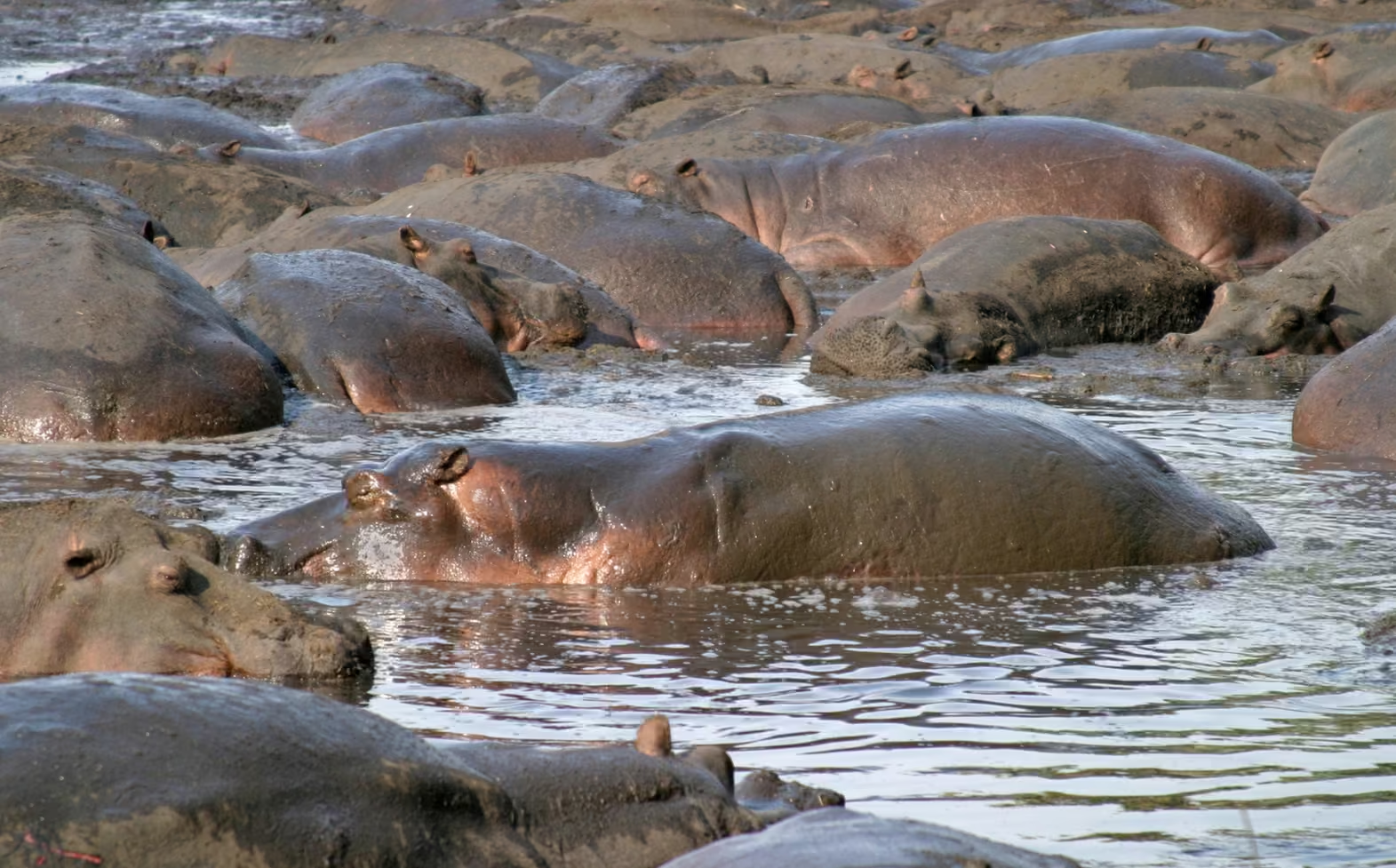
One of Katavi’s most extraordinary dry season spectacles involves its hippos.
As rivers and pools shrink, increasing numbers of hippos are forced into progressively smaller bodies of water.
Large concentrations may gather within remaining pools.
The competition for space can produce intense interactions between individuals.
Nile crocodiles also inhabit these waterways and may become concentrated around remaining water.
This extraordinary natural spectacle is one of the experiences that has made Katavi famous among experienced safari travelers and wildlife photographers.
Elephants
Elephants are widely distributed throughout Katavi.
During the dry season, they frequently visit rivers, pools and floodplain areas.
Visitors may observe:
- Family herds
- Large bulls
- Elephants bathing
- Herds crossing open plains
- Elephants feeding in woodland
Watching elephants move through Katavi’s enormous landscapes reinforces the extraordinary scale of the park.
Predators of Katavi
Katavi supports a healthy population of large predators.
Lions are among the most frequently observed carnivores.
Prides may be seen around floodplains where buffaloes, zebras and antelopes provide abundant prey.
Leopards inhabit woodland and riverine areas but remain naturally elusive.
Spotted hyenas are also present and play an important ecological role as both hunters and scavengers.
Predator sightings may include:
- Lions
- Leopards
- Spotted hyenas
- Jackals
Katavi’s low number of safari vehicles makes predator encounters especially rewarding.
Birdlife in Katavi National Park
Katavi is also an excellent destination for birdwatching in western Tanzania.
Hundreds of bird species occur within the park’s varied habitats.
Birdwatchers may encounter:
- African fish eagles
- Saddle billed storks
- Open billed storks
- Herons
- Egrets
- Kingfishers
- Bee eaters
- Hornbills
- Raptors
- Waterfowl
- Woodland birds
- Migratory species
Wetland areas are especially productive when water levels support large concentrations of aquatic birds.
Accessibility to Katavi National Park
Katavi’s remote location is one of the reasons it remains so wild.
Reaching the park requires more planning than visiting Tanzania’s Northern Circuit destinations.
Most international safari travelers reach Katavi by scheduled or chartered light aircraft.
Traveling by Air
Flying is generally the most practical way to reach Katavi National Park.
Depending on seasonal schedules and safari routing, flights may connect western Tanzania with major tourism centers or other safari destinations.
Flying dramatically reduces travel time and makes it possible to combine Katavi with destinations such as:
- Mahale Mountains National Park
- Serengeti National Park
- Northern Tanzania
- Other western Tanzania safari areas
After arriving at an airstrip serving the park, visitors are normally transferred directly to their safari camp.
Traveling From Arusha
Travelers beginning their journey with Martial Eagle Adventures in Arusha can reach Katavi through domestic aviation connections arranged as part of a customized itinerary.
A safari might combine:
- Arusha
- Serengeti National Park
- Katavi National Park
- Mahale Mountains National Park
This journey offers extraordinary ecological diversity, moving from famous savannah ecosystems to remote western wilderness and chimpanzee forests.
Traveling by Road
Road access is possible but involves substantial distances.
Travelers should expect:
- Long driving times
- Remote roads
- Variable road conditions
- Limited services
- Seasonal accessibility challenges
- Need for a reliable 4×4 vehicle
Overland travel may appeal to highly adventurous travelers with sufficient time.
For most visitors, however, flying provides a considerably more practical experience.
Best Time to Visit Katavi National Park
Katavi’s safari experience changes dramatically according to season.
For classic wildlife viewing, the dry season from approximately June through October is generally the most rewarding period.
June to October
As rainfall decreases, seasonal wetlands gradually dry and wildlife becomes increasingly concentrated around permanent water sources.
This creates outstanding opportunities for observing:
- Large buffalo herds
- Elephants
- Hippos
- Crocodiles
- Lions
- Zebras
- Antelopes
- Predator and prey interactions
By the later dry season, concentrations around water can become particularly dramatic.
Benefits of visiting during this period include:
- Excellent wildlife viewing
- Reduced vegetation
- High animal concentrations
- Easier wildlife photography
- Better road conditions
- Strong predator activity
- Dramatic river and pool encounters
For first time visitors focused on wildlife, this is generally the preferred season.
November to December
Seasonal rains begin transforming the landscape.
Dry plains gradually become green and temporary water sources return.
Wildlife starts dispersing away from permanent rivers and pools.
This period can provide:
- Green landscapes
- Excellent birdwatching
- Migratory birds
- Dramatic skies
- Fewer visitors
- Excellent landscape photography
Wildlife remains present, but animals may be more widely dispersed.
January to February
The green season continues, creating beautiful scenery.
Travelers may enjoy:
- Lush landscapes
- Birdlife
- Young animals
- Fewer safari vehicles
- Dramatic photography
However, wildlife concentrations are generally less intense than during the dry season.
March to May
The main rainy season can make travel considerably more challenging.
Roads may become difficult and some safari camps may close seasonally.
Visitors should consider:
- Camp operating schedules
- Flight availability
- Road conditions
- Heavy rainfall
- Flooded landscapes
Although tourism becomes more challenging, the wet season demonstrates the ecological transformation that sustains Katavi’s wildlife.
Common Activities in Katavi National Park
Katavi offers an intimate safari experience centered around wildlife, photography and wilderness exploration.
Game Drives
Game drives in Katavi National Park are the primary activity.
Safari vehicles explore:
- Katisunga floodplain
- Katuma River
- Lake Chada
- Woodland
- Seasonal wetlands
- Wildlife corridors
Morning game drives are excellent for searching for predators while temperatures remain cool.
Afternoon drives provide beautiful photography as golden light spreads across the floodplains.
Possible sightings include:
- Lions
- Elephants
- Buffaloes
- Hippos
- Crocodiles
- Giraffes
- Zebras
- Leopards
- Hyenas
- Antelopes
Because visitor numbers are low, wildlife encounters can feel remarkably private.
Predator Viewing
Katavi is an excellent destination for travelers interested in predator behavior.
Lions frequently patrol productive wildlife areas.
During the dry season, predators may concentrate around:
- Buffalo herds
- Water sources
- Floodplains
- River channels
Patient observation can reveal fascinating natural behavior.
Hippo Watching
Observing Katavi’s hippos is one of the park’s signature experiences.
During the dry season, shrinking pools may contain remarkable concentrations of animals.
Visitors can observe their behavior from appropriate viewing locations while maintaining safe distances.
Birdwatching
Katavi offers excellent birding opportunities throughout the year.
Birdwatching can be incorporated into game drives or enjoyed around safari camps.
The green season is especially rewarding for travelers interested in migratory species and breeding activity.
Wildlife Photography
Katavi is one of Tanzania’s most exciting destinations for serious wildlife photography.
Photographic subjects include:
- Large buffalo herds
- Lions
- Elephants
- Hippo concentrations
- Crocodiles
- Leopards
- Floodplain landscapes
- Waterbirds
- Sunsets
- Predator interactions
The low number of vehicles gives photographers more time and space to observe animal behavior.
Walking Safaris
Depending on current regulations, location and camp operations, professionally guided walking safaris may be available in selected areas.
Walking provides a completely different understanding of the wilderness.
Guides may interpret:
- Animal tracks
- Droppings
- Plants
- Insects
- Birds
- Wildlife signs
- Ecological relationships
Walking safaris focus on appreciating the complete ecosystem rather than simply approaching large animals.
Bush Experiences
Selected safari camps may offer additional experiences such as:
- Bush breakfasts
- Sundowners
- Campfire evenings
- Private dining
- Scenic viewpoints
- Photography focused drives
These experiences add comfort and atmosphere without taking away from Katavi’s wild character.
Accommodation Options in Katavi National Park
Accommodation in Katavi is deliberately limited.
There are far fewer properties than in Serengeti, which contributes significantly to the park’s exclusive atmosphere.
Options generally include intimate safari camps, seasonal tented camps and simpler accommodation.
Luxury Safari Camps
Luxury camps provide high levels of comfort while maintaining a strong connection with the surrounding wilderness.
Facilities may include:
- Spacious safari tents
- En suite bathrooms
- Private verandas
- Comfortable beds
- Fine dining
- Personalized guiding
- Game drives
- Bush dining
- Sundowners
- Laundry services
These camps are particularly suitable for honeymooners, photographers and travelers seeking exclusive wilderness experiences.
Tented Safari Camps
Tented camps are among the most atmospheric ways to experience Katavi.
Guests may stay in comfortable canvas accommodation surrounded by natural wilderness.
Facilities can include:
- En suite tents
- Dining areas
- Campfire lounges
- Solar power
- Private verandas
- Guided safari activities
At night, visitors may hear lions, hippos and other wildlife from camp.
Seasonal Camps
Some safari properties operate only during the most favorable tourism months.
Seasonal camps can be positioned close to productive wildlife areas during the dry season.
Travelers should therefore book well in advance because accommodation capacity in Katavi is limited.
Simpler Accommodation
More basic facilities may be available depending on park operations and itinerary arrangements.
These options can suit:
- Adventurous travelers
- Researchers
- Budget conscious visitors
- Overland travelers
The focus is generally on location and wilderness rather than luxury.
Why Visit Katavi National Park
Katavi is not designed for travelers seeking busy tourism centers or extensive lodge choices.
Its greatest attraction is precisely the opposite.
It offers space, wildlife and wilderness.
Katavi is especially recommended for:
- Experienced safari travelers
- Wildlife photographers
- Lion enthusiasts
- Elephant lovers
- Birdwatchers
- Honeymooners seeking privacy
- Remote safari enthusiasts
- Western Tanzania safari travelers
- Repeat visitors to Tanzania
- Travelers seeking uncrowded game viewing
- Adventure travelers
- Travelers combining Katavi and Mahale
For visitors who want to experience Africa with minimal tourism traffic, Katavi is one of Tanzania’s finest destinations.
Katavi National Park Safari Experience
A typical day in Katavi begins before sunrise.
After coffee or tea at camp, visitors depart while the landscape remains cool and wildlife is active.
The safari may begin around the Katisunga floodplain, where buffaloes and zebras spread across the grasslands.
Lions may be resting after a night of hunting, while hyenas move between herds searching for opportunities.
As the morning progresses, the journey may continue toward the Katuma River.
During the dry season, elephants arrive to drink while hippos crowd into remaining pools and crocodiles rest along exposed banks.
After returning to camp for lunch, visitors relax during the hottest hours.
Late afternoon brings another game drive.
Golden light spreads across the floodplain, elephants emerge from woodland and predators begin becoming active again.
The evening ends beneath an enormous African sky.
With very few lodges and safari vehicles, the silence of Katavi after sunset is remarkable.
This is not simply wildlife viewing.
It is immersion in one of Tanzania’s last great wilderness landscapes.
Katavi for Wildlife Photographers
Katavi is particularly rewarding for photographers because of its combination of dramatic wildlife concentrations and low vehicle density.
Photography opportunities include:
- Lions around buffalo herds
- Elephants at water sources
- Hippo behavior
- Crocodiles
- Large buffalo herds
- Giraffes crossing open plains
Read Reviews


Follow us
- Martial Eagle Adventures
- @martialeagleadventures
- +255 652 283 399
- +255 652 283 399
- sales@martialeagleadventures.com
- Arusha, Tanzania
We Accept