
Mahale Mountain National Park

About Mahale Mountains National Park

Discover Mahale Mountains National Park With Martial Eagle Adventures
Hidden along the remote eastern shoreline of Lake Tanganyika in western Tanzania, Mahale Mountains National Park is one of Africa’s most extraordinary wilderness destinations. Here, forested mountains rise dramatically from crystal clear lake waters, wild chimpanzees move through ancient tropical forests and white sandy beaches create an unexpected tropical atmosphere in the heart of the African continent.
Mahale is unlike the traditional safari landscapes of Serengeti, Ngorongoro or Tarangire. There are no extensive networks of safari roads and very few vehicles. Instead, visitors explore the park primarily on foot and by boat, creating a deeply personal connection with the surrounding wilderness.
The park is internationally famous for its population of wild chimpanzees, making Mahale one of the best destinations in Africa for chimpanzee trekking. Travelers can hike into the forests with professional guides, search for habituated chimpanzee communities and observe these remarkable primates feeding, grooming, playing and communicating in their natural habitat.
Beyond chimpanzees, Mahale offers spectacular mountain scenery, waterfalls, birdlife, other primates, Lake Tanganyika beaches, fishing experiences, boating and some of the most peaceful sunsets found anywhere in Tanzania.
For travelers searching for a luxury western Tanzania safari, Mahale chimpanzee trekking experience, remote Tanzania honeymoon, primate safari or Lake Tanganyika adventure, this remarkable national park offers something truly different.
At Martial Eagle Adventures, based in Arusha, Tanzania, we create carefully planned Mahale Mountains National Park safaris designed for travelers seeking authentic wilderness, unforgettable chimpanzee encounters and extraordinary journeys beyond Tanzania’s traditional safari routes.
History of Mahale Mountains National Park
The history of Mahale Mountains National Park is closely connected to its indigenous communities, remote forests, chimpanzees and the development of primate conservation in western Tanzania.
For generations, people lived within and around the Mahale Mountains, relying on fishing, farming and the natural resources of Lake Tanganyika and the surrounding forests. The area’s isolation helped preserve large sections of its forests and wildlife long before formal conservation measures were introduced.
During the twentieth century, scientists became increasingly interested in the chimpanzee populations living within the Mahale Mountains.
Long term primate research began in the region during the 1960s, helping scientists gain a deeper understanding of chimpanzee social structures, feeding habits, communication, territorial behavior and relationships between individual animals.
Scientific research eventually became one of the strongest arguments for protecting the ecosystem.
Mahale Mountains National Park was officially established in 1985, preserving a significant area of forest, mountain habitat and Lake Tanganyika shoreline.
The creation of the national park helped protect not only chimpanzees but also many other primates, mammals, birds, reptiles and plant species.
Today, Mahale has become internationally recognized as one of Africa’s premier chimpanzee conservation areas.
Important historical and conservation highlights include:
- Development of long term chimpanzee research beginning during the twentieth century
- Growing international recognition of the Mahale chimpanzee population
- Official establishment of Mahale Mountains National Park in 1985
- Protection of extensive tropical and montane forest habitats
- Conservation of Lake Tanganyika shoreline ecosystems
- Continued scientific research into chimpanzee behavior
- Development of carefully controlled chimpanzee tourism
- Protection of remote western Tanzania wilderness
Mahale remains one of the finest examples of how scientific research, conservation and responsible tourism can work together to protect a remarkable ecosystem.
Geography Size and Ecology of Mahale Mountains National Park
Mahale Mountains National Park covers approximately 1,613 square kilometers along the eastern shoreline of Lake Tanganyika.
The landscape is dominated by the dramatic Mahale Mountain Range, which rises steeply from the lake and forms one of the most spectacular geographical settings found in any Tanzanian national park.
The highest point within the mountain range is Mount Nkungwe, reaching approximately 2,462 meters above sea level.
The dramatic difference between the elevation of Lake Tanganyika and the surrounding mountain peaks creates several ecological zones within a relatively compact area.
Mahale contains:
- Tropical forest
- Montane forest
- Miombo woodland
- Bamboo vegetation
- Grasslands
- Mountain streams
- Waterfalls
- Sandy beaches
- Rocky ridges
- Lake Tanganyika shoreline habitats
This remarkable combination of mountains, forests and freshwater ecosystems contributes to the park’s extraordinary biodiversity.
Lake Tanganyika
Lake Tanganyika forms the western boundary of Mahale Mountains National Park and is one of the defining features of the destination.
It is one of the world’s oldest and deepest freshwater lakes and stretches across several countries in East Africa.
The Tanzanian shoreline around Mahale is especially beautiful.
Clear waters meet sandy beaches beneath heavily forested mountains, creating landscapes that sometimes feel more like an isolated tropical island than an inland African safari destination.
Lake Tanganyika supports an exceptional variety of freshwater life, including numerous species of colorful cichlid fish.
For visitors, the lake provides opportunities for:
- Boat excursions
- Swimming in approved areas
- Fishing experiences where permitted
- Snorkeling
- Photography
- Sunset cruises
- Relaxation on sandy beaches
The combination of chimpanzee trekking in the morning and relaxing beside Lake Tanganyika in the afternoon is one of the experiences that makes Mahale so unique.
The Mahale Mountain Range
The Mahale Mountains rise sharply from the lakeshore and form the ecological backbone of the national park.
Dense forests cover many slopes, providing essential habitat for chimpanzees and other wildlife.
Streams descend from the mountains toward Lake Tanganyika, creating waterfalls, forest valleys and reliable sources of freshwater.
Mount Nkungwe provides the highest point in the park and can attract experienced hikers interested in longer trekking adventures.
The rugged terrain also helps explain why Mahale remains so wild.
There are few roads, and much of the park can only be explored on foot.
Chimpanzees of Mahale Mountains National Park
The main wildlife attraction is the park’s population of wild chimpanzees.
Mahale protects one of Africa’s most important chimpanzee habitats, and several communities have been studied over many decades.
Some chimpanzees have become habituated to the presence of researchers and carefully controlled groups of visitors.
This allows travelers to observe natural behaviors without keeping the animals in captivity.
During a chimpanzee encounter, visitors may witness:
- Grooming between family members
- Mothers carrying infants
- Young chimpanzees playing
- Feeding in trees
- Vocal communication
- Dominance displays
- Resting
- Social alliances
- Movement between feeding locations
- Tool related behavior
Chimpanzees are extremely intelligent and socially complex animals.
Watching them in the wild can be one of the most emotionally powerful experiences available on an African primate safari.
Other Primates in Mahale
Chimpanzees are not the only primates found within the park.
Mahale also supports species such as:
- Yellow baboons
- Red colobus monkeys
- Red tailed monkeys
- Blue monkeys
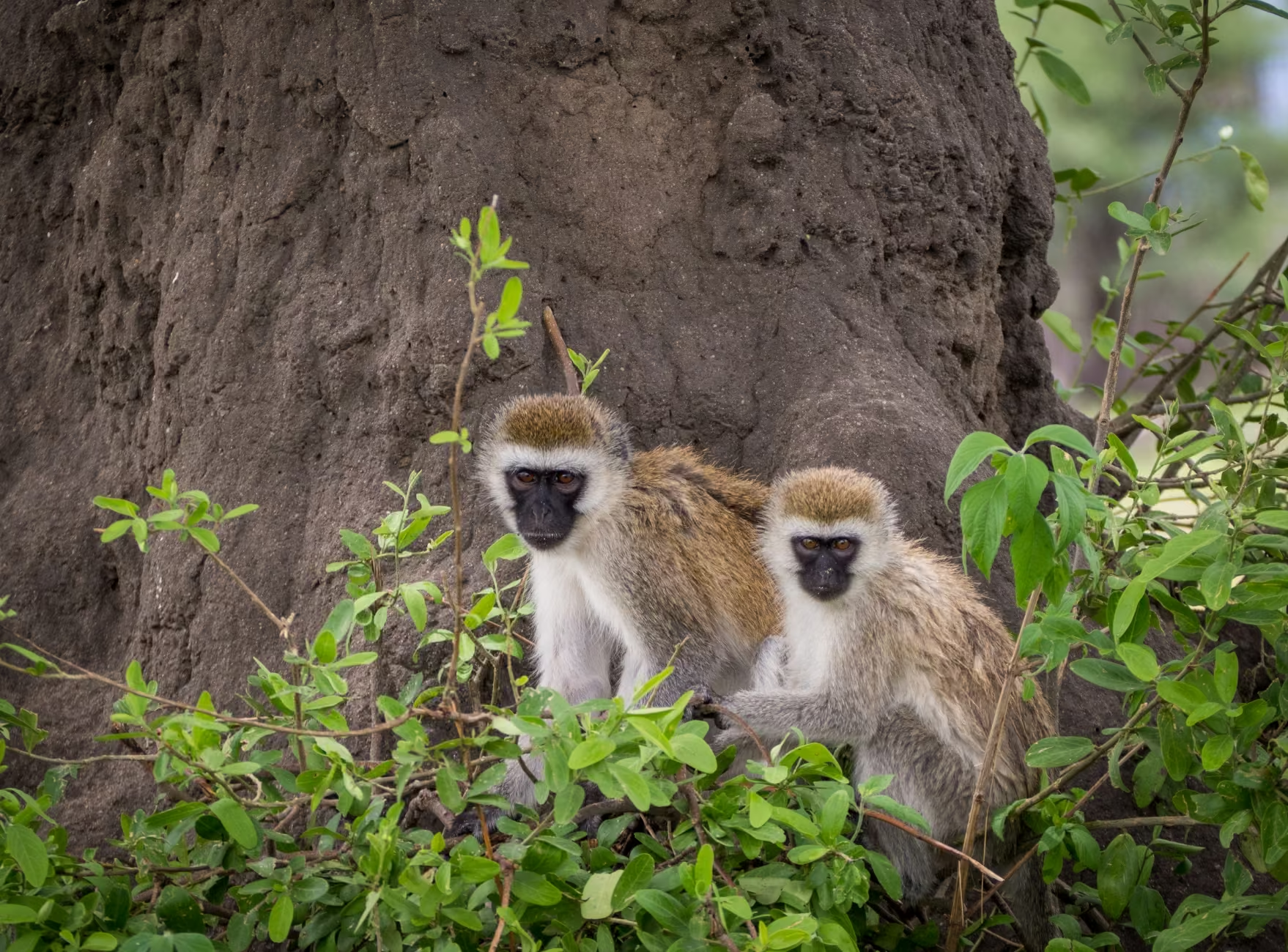
- Vervet monkeys
These species may be encountered while hiking through the forests or around lodge areas.
Their presence makes Mahale an exceptional destination for travelers interested in African primates and wildlife behavior.
Other Wildlife in Mahale Mountains National Park
The forests and woodland of Mahale support a variety of mammals beyond primates.
Wildlife that may occur within the park includes:
- Bushbucks
- Bushpigs
- Warthogs
- Small antelope species
- Various rodents
- Small carnivores
- Reptiles
Larger mammals such as elephants and other species may occur in more remote parts of the wider ecosystem, although Mahale is primarily visited for chimpanzees rather than traditional Big Five game viewing.
The dense vegetation makes wildlife observation very different from open savannah parks.
Visitors should therefore appreciate Mahale as a forest and primate safari destination rather than a conventional vehicle safari.
Birdlife in Mahale Mountains National Park
Mahale is also an excellent destination for birdwatching in western Tanzania.
The combination of Lake Tanganyika, forest, woodland and mountain habitats supports hundreds of bird species.
Birdwatchers may encounter:
- African fish eagles
- Kingfishers
- Hornbills
- Turacos
- Sunbirds
- Bee eaters
- Waterbirds
- Forest species
- Raptors
- Migratory birds
Early morning forest walks and lakeshore areas can be particularly rewarding for bird photography.
Accessibility to Mahale Mountains National Park
Mahale Mountains National Park is intentionally remote, and reaching it is part of the adventure.
There is no conventional road network connecting visitors directly to the primary tourism areas of the park.
Most travelers arrive by a combination of domestic flight and boat transfer.
Traveling by Air
For most safari travelers, flying is the most convenient way to reach Mahale.
Scheduled or charter flights may connect western Tanzania with major safari hubs depending on the season and operating schedule.
Flights may originate from or connect through destinations such as:
- Arusha
- Northern Tanzania safari areas
- Dar es Salaam
- Other western Tanzania wilderness destinations
After landing at an airstrip serving the Mahale region, visitors normally continue toward their lodge or camp by boat.
This final boat transfer creates an unforgettable arrival.
The sight of densely forested mountains rising behind turquoise waters immediately reveals why Mahale is considered one of Tanzania’s most beautiful wilderness destinations.
Traveling Through Kigoma
Visitors can also approach Mahale through Kigoma, the principal town on the Tanzanian side of Lake Tanganyika.
Kigoma can be reached by domestic flight, road or rail depending on the itinerary.
From Kigoma, travelers continue southward by boat toward Mahale.
Travel time depends on:
- Type of vessel
- Weather
- Lake conditions
- Departure point
- Final accommodation location
Because the journey can be lengthy, professionally arranged transfers are strongly recommended.
Traveling From Arusha
Travelers beginning their Tanzania holiday in Arusha can combine Mahale with Northern Circuit safari destinations.
A customized itinerary may include:
- Arusha
- Tarangire National Park
- Ngorongoro Conservation Area
- Serengeti National Park
- Mahale Mountains National Park
This creates an extraordinary itinerary combining classic savannah game viewing with chimpanzee trekking and Lake Tanganyika.
Martial Eagle Adventures can also create itineraries connecting Mahale with other remote western Tanzania destinations.
Best Time to Visit Mahale Mountains National Park
Mahale can be visited during much of the year, but trekking conditions, chimpanzee movements and accessibility vary seasonally.
The dry season between June and October is generally considered the most popular time for visiting.
June to October
The dry season offers some of the most favorable conditions for chimpanzee trekking.
During these months:
- Forest trails are generally drier
- Trekking can be easier
- Chimpanzees may remain closer to lower mountain slopes at certain times
- Visibility can improve
- Lake conditions are often suitable for activities
- Photography conditions can be excellent
- Humidity may feel more manageable
The months of August, September and October are especially popular with travelers focused on primate trekking.
However, chimpanzees remain completely wild, meaning their exact location can never be guaranteed.
November to December
The arrival of seasonal rains transforms Mahale into an intensely green landscape.
This period can offer:
- Beautiful forest scenery
- Excellent birdwatching
- Fewer visitors
- Dramatic photography
- Active vegetation
Trails may become wetter and more slippery, making good hiking footwear important.
January to February
January and February can provide rewarding conditions between heavier rainy periods.
Travelers may experience:
- Warm temperatures
- Green landscapes
- Excellent birdlife
- Beautiful Lake Tanganyika scenery
- Fewer visitors than during peak dry season
Chimpanzee trekking remains possible, although the animals may move according to seasonal food availability.
March to May
The major rainy season generally occurs between March and May.
The forest becomes extremely lush, but heavy rainfall may make trekking more challenging.
Some accommodation properties or transportation services may operate seasonally, so careful itinerary planning is required.
Visitors during this period should expect:
- Muddy trails
- Higher humidity
- Rainfall
- More physically demanding trekking
- Beautiful green vegetation
- Excellent bird activity
For most first time visitors, June through October remains the most convenient period for a Mahale chimpanzee safari.
Common Activities in Mahale Mountains National Park
Mahale offers far more than chimpanzee trekking.
Its combination of mountains, forest and Lake Tanganyika allows travelers to enjoy several different forms of adventure within one destination.
Chimpanzee Trekking
Chimpanzee trekking in Mahale Mountains National Park is the park’s signature activity.
The adventure normally begins in the morning after visitors receive a briefing from professional guides.
Trackers monitor signs of chimpanzee movement and communicate information about the approximate location of habituated groups.
Visitors then enter the forest on foot.
The difficulty and duration of each trek varies considerably.
On some days, chimpanzees may be located close to lower forest areas.
On other days, visitors may need to climb deeper into the mountains.
Trekking can include:
- Steep climbs
- Forest trails
- Stream crossings
- Rocky terrain
- Humid conditions
- Long walking periods
Once chimpanzees are located, visitors follow strict conservation rules while observing them.
Important chimpanzee trekking principles include:
- Follow all instructions from guides
- Maintain required distances from chimpanzees
- Never touch or feed the animals
- Keep voices low
- Do not visit chimpanzees when suffering from contagious illness
- Respect regulated observation times
- Avoid sudden movements
- Follow all health and hygiene requirements
These rules protect the chimpanzees from stress and human transmitted disease.
Forest Hiking
Mahale contains excellent opportunities for hiking beyond chimpanzee tracking.
Visitors can explore:
- Mountain trails
- Forest valleys
- Streams
- Waterfalls
- Scenic viewpoints
- Lakeshore paths
Hiking reveals a completely different side of Tanzania compared with vehicle based safari experiences.
Professional guides can explain forest ecology, plants, birdlife, insects and wildlife signs encountered along the trail.
Mount Nkungwe Trekking
Adventure travelers may be interested in climbing Mount Nkungwe, the highest peak within the Mahale Mountains.
The trek is significantly more demanding than standard chimpanzee excursions and may require extended planning.
The journey can include:
- Dense forest
- Steep terrain
- High altitude vegetation
- Mountain viewpoints
- Wildlife observation
- Camping depending on itinerary
Mount Nkungwe trekking is best suited to physically fit travelers who enjoy challenging wilderness adventures.
Lake Tanganyika Boat Safaris
Boat excursions allow travelers to experience Mahale from an entirely different perspective.
From the lake, visitors can appreciate the dramatic scale of the mountains and forests.
Boat trips may include:
- Scenic exploration
- Photography
- Sunset cruises
- Birdwatching
- Transfers to hiking areas
- Fishing experiences where permitted
Sunset boat trips can be particularly memorable as the sky changes color above one of Africa’s great lakes.
Swimming
Lake Tanganyika’s clear waters are extremely inviting.
Swimming may be possible in approved locations around lodges and camps.
Visitors must always follow guidance regarding appropriate swimming areas and local conditions.
Relaxing in the lake after a demanding morning of chimpanzee trekking can be one of the great pleasures of a Mahale safari.
Snorkeling
The remarkable diversity of Lake Tanganyika’s freshwater fish makes snorkeling an unusual but rewarding Mahale activity.
The lake is especially famous for colorful cichlid fish, many of which are associated with the ancient ecosystem of Lake Tanganyika.
Snorkeling offers a completely different wildlife experience from the forest above.
Fishing Experiences
Fishing may be arranged in permitted areas according to regulations and lodge operations.
Lake Tanganyika has a long fishing tradition and supports numerous fish species.
Responsible recreational fishing activities can add another dimension to a Mahale adventure.
Birdwatching
Birdwatching can be enjoyed during chimpanzee treks, forest walks and boat excursions.
Mahale’s varied ecological environments make it possible to observe both forest and aquatic birds.
Early mornings are particularly rewarding.
Wildlife Photography
Mahale is an exceptional destination for photographers.
Popular subjects include:
- Wild chimpanzees
- Monkeys
- Forest landscapes
- Lake Tanganyika
- Sandy beaches
- Mountains
- Waterfalls
- Tropical vegetation
- Fishing boats
- Sunsets
Chimpanzee photography can be challenging because the forest often has low light.
Photographers should prepare for rapidly moving subjects and changing conditions.
Relaxing Along Lake Tanganyika
One of the most remarkable aspects of Mahale is the opportunity to relax after trekking.
Travelers can spend afternoons:
- Walking along sandy beaches
- Reading beside the lake
- Swimming
- Watching birds
- Enjoying boat excursions
- Photographing sunsets
The peaceful environment makes Mahale particularly appealing to honeymooners and travelers seeking privacy.
Accommodation Options in Mahale Mountains National Park
Accommodation in Mahale is limited compared with major safari destinations, which helps maintain the park’s exclusive and remote character.
Options range from sophisticated luxury camps to more adventurous facilities.
Luxury Lakeside Camps
Luxury accommodation in Mahale offers one of Tanzania’s most distinctive safari experiences.
Properties are often positioned between forested mountains and Lake Tanganyika.
Guests may enjoy:
- Spacious rooms or safari tents
- Private bathrooms
- Lakeside verandas
- Gourmet dining
- Professional guides
- Chimpanzee trekking arrangements
- Boat excursions
- Beach areas
- Personalized services
- Sunset experiences
These camps are particularly attractive for honeymooners, luxury travelers and photographers.
Luxury Tented Camps
Tented accommodation allows visitors to remain immersed in the wilderness while enjoying a high level of comfort.
Facilities may include:
- Spacious canvas tents
- Comfortable beds
- En suite bathrooms
- Private terraces
- Dining facilities
- Lounge areas
- Beach access
- Guided activities
The sound of Lake Tanganyika and the surrounding forest creates an unforgettable atmosphere.
Simple Wilderness Accommodation
Travelers prioritizing adventure over luxury may find simpler options depending on park operations and availability.
These may provide:
- Basic rooms or bandas
- Essential bathroom facilities
- Meals
- Trekking arrangements
- Access to park activities
Such accommodation can suit researchers, independent adventurers and budget conscious visitors.
What to Expect From Mahale Accommodation
Because Mahale is extremely remote, travelers should understand that logistics are more complex than in Arusha, Serengeti or Zanzibar.
Many supplies must reach camps by air or boat.
This makes accommodation more expensive than some mainland destinations, but visitors receive something equally valuable in return: privacy, wilderness and an exceptionally intimate safari environment.
Why Visit Mahale Mountains National Park
Mahale Mountains National Park is ideal for travelers who want to experience a side of Tanzania that few visitors ever see.
The park is especially recommended for:
- Chimpanzee trekking
- Primate photography
- Western Tanzania safaris
- Luxury wilderness travel
- Honeymoon safaris
- Forest hiking
- Lake Tanganyika holidays
- Birdwatching
- Adventure travel
- Wildlife research enthusiasts
- Repeat visitors to Tanzania
- Remote African safari experiences
Unlike conventional safari destinations, Mahale combines wildlife adventure with an almost tropical atmosphere.
A traveler might spend the morning following wild chimpanzees through mountain forest and the afternoon swimming in Lake Tanganyika beneath a golden sunset.
Few places in Africa offer this combination.
Mahale Chimpanzee Safari Experience
A typical day in Mahale begins as dawn breaks over the mountains.
After breakfast, guests receive information from trackers about the approximate location of chimpanzee groups.
Visitors then enter the forest with their guide.
As the trek progresses, signs begin to appear.
Broken vegetation, distant calls, fresh feeding remains or movement high in the forest canopy may indicate that chimpanzees are nearby.
Then, suddenly, the forest can come alive.
A chimpanzee may descend from a tree.
Young animals may chase one another through vegetation.
Adults groom quietly beneath the canopy.
Loud vocalizations may echo through the valley as different individuals communicate.
After the permitted observation period, visitors return toward camp.
The afternoon may then be spent swimming, enjoying lunch beside the lake, taking a boat excursion or relaxing on the beach.
As evening arrives, the mountains become silhouettes against the sky while the waters of Lake Tanganyika reflect the sunset.
It is this combination of adventure and tranquility that makes Mahale unforgettable.
Mahale for Wildlife Photographers
Mahale is particularly rewarding for photographers interested in primates.
Opportunities include:
- Chimpanzee portraits
- Chimpanzee family interactions
- Young chimpanzees playing
- Grooming behavior
- Forest landscapes
- Monkeys
- Tropical birds
- Mountains
- Beaches
- Lake Tanganyika sunsets
Forest photography requires patience and flexibility.
Natural light may be limited, so photographers should prepare equipment suitable for higher sensitivity settings and rapidly changing conditions.
Mahale for Honeymoon Safaris
For couples looking for something beyond the traditional safari, Mahale provides an extraordinary setting.
The destination combines:
- Remote wilderness
- Small luxury camps
- Sandy beaches
- Forest adventures
- Boat excursions
- Spectacular sunsets
- Chimpanzee encounters
- Exceptional privacy
A Mahale honeymoon safari can also be combined with Serengeti wildlife viewing or Zanzibar beach relaxation for an incredibly diverse romantic journey through Tanzania.
Combine Mahale With Gombe Stream National Park
Travelers with a particular interest in primates may combine Mahale with Gombe Stream National Park.
Both destinations lie along Lake Tanganyika and offer chimpanzee trekking, but they provide noticeably different experiences.
Gombe is internationally famous for its connection to Jane Goodall and the history of chimpanzee research.
Mahale offers a larger mountain wilderness combined with spectacular beaches and Lake Tanganyika activities.
Together, these destinations create one of Africa’s finest chimpanzee safari itineraries.
Combine Mahale With Katavi National Park
Another exceptional western Tanzania itinerary combines:
- Mahale Mountains National Park
- Katavi National Park
Katavi provides classic savannah wildlife viewing, while Mahale offers forest based primate trekking.
Travelers can experience:
- Lions
- Elephants
- Buffaloes
- Hippos
- Crocodiles
- Chimpanzees
- Monkeys
- Lake Tanganyika
This combination offers remarkable ecological diversity and very low visitor numbers.
Combine Mahale With a Complete Tanzania Safari
Travelers with sufficient time can include Mahale within a larger Tanzania itinerary.
A comprehensive journey may include:
- Arusha
- Tarangire National Park
- Ngorongoro Conservation Area
- Serengeti National Park
- Katavi National Park
- Mahale Mountains National Park
- Zanzibar
Such an itinerary combines savannah wildlife, Great Migration experiences, chimpanzee trekking, remote wilderness and Indian Ocean beaches.
It is one of the most complete ways to experience Tanzania.
Responsible Chimpanzee Tourism
Chimpanzees share many biological similarities with humans, which also means they can be vulnerable to human illnesses.
Responsible tourism is therefore essential.
Visitors should:
- Follow instructions from guides and park authorities
- Maintain required distances
- Never touch chimpanzees
- Never feed wildlife
- Avoid trekking when experiencing contagious illness
- Follow hygiene regulations
- Keep voices low
- Respect observation limits
- Never chase chimpanzees for photographs
- Avoid damaging vegetation
- Carry out all waste
These guidelines protect both chimpanzees and visitors.
Essential Travel Tips for Mahale Mountains National Park
Mahale requires more preparation than conventional road safari destinations.
Recommended items include:
- Strong hiking shoes
- Lightweight long trousers
- Breathable shirts
- Rain jacket
- Small trekking backpack
- Refillable water bottle
- Sun hat
- Sunglasses
- Sunscreen
- Insect repellent
- Binoculars
- Camera equipment
- Waterproof protection for electronics
- Personal medication
- Comfortable sandals for the lodge
- Swimming clothes
- Walking poles if preferred
Visitors should prepare for humid forest conditions and potentially steep trekking terrain.
A moderate level of physical fitness makes the experience more comfortable.
Plan Your Mahale Mountains Safari With Martial Eagle Adventures
Travel beyond Tanzania’s famous savannahs and discover one of Africa’s most remarkable wilderness destinations with Martial Eagle Adventures, based in Arusha, Tanzania.
Mahale Mountains National Park offers something rare in modern travel: a genuine feeling of discovery.
Here, there are no crowded safari roads stretching across the landscape. Instead, forest paths climb through ancient mountains, chimpanzees call from hidden valleys and the clear waters of Lake Tanganyika meet quiet beaches beneath some of the most beautiful wilderness scenery in Tanzania.
Whether you are planning a dedicated Mahale chimpanzee trekking safari, luxury western Tanzania safari, Mahale and Katavi adventure, Gombe and Mahale primate safari, honeymoon journey or complete Tanzania wildlife holiday, Martial Eagle Adventures can design an itinerary based around your interests, preferred accommodation style and available travel time.
Follow experienced trackers into the forest in search of wild chimpanzees. Watch families interact beneath the canopy. Explore mountain trails and waterfalls before returning to the shores of Lake Tanganyika. Swim in clear freshwater, enjoy peaceful boat journeys and watch the evening sun disappear across one of Africa’s greatest lakes.
Mahale is not simply another destination on a Tanzania safari.
It is a place where mountains, forests, chimpanzees and Lake Tanganyika come together to create one of Africa’s most intimate wilderness experiences.
Explore Mahale Mountains National Park with Martial Eagle Adventures and discover a remote side of Tanzania where wild chimpanzees, untouched forests, spectacular mountains and the timeless waters of Lake Tanganyika create an adventure you will remember for a lifetime.
Read Reviews


Follow us
- Martial Eagle Adventures
- @martialeagleadventures
- +255 652 283 399
- +255 652 283 399
- sales@martialeagleadventures.com
- Arusha, Tanzania
We Accept